
UNGA81: A Feminist Renewal of Multilateralism
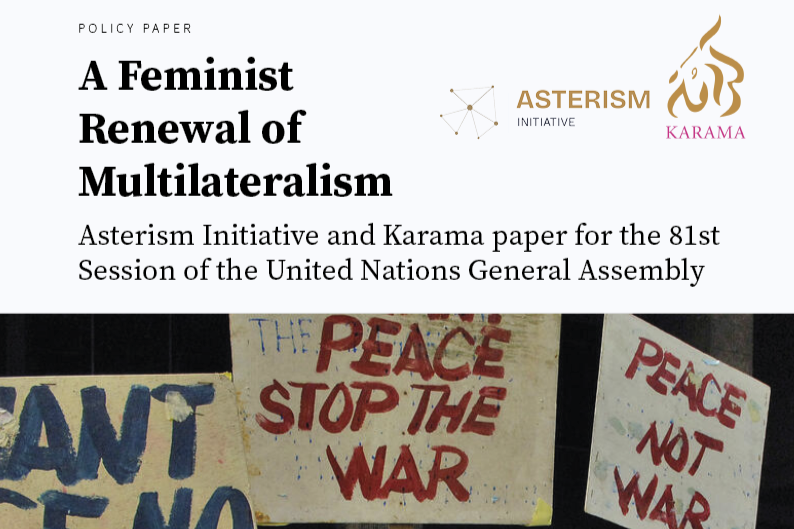
Asterism Initiative and Karama paper for UNGA81. Photo: UN Photo/Eric Kanalstein
World leaders are gathering in New York for UN General Assembly at an institution in crisis, their response should be a feminist renewal of the multilateral system. That is the message of the paper launched by Karama and the Asterism Initiative at UNGA81.
The United Nations faces a series of interlocking and compounding crises, hampering it in its fundamental role of maintaining global peace and security, and preventing decisive action critical matters like the climate crisis and human rights agendas.
In response to its financial straights and a wider crisis of confidence, the UN has put forward reform proposals that seek to stem the tide, rather than taking a broader perspective. The paper launched today sets out the need to face down the challenges through a feminist approach. It argues it is neither possible nor desirable to return to the multilateralism practiced before the crisis. Rather, we need to take the opportunity of the moment for inclusive and democratic process that reshapes multilateralism.
This process needs to rethink security, bases around human need. It must address the inequalities of the system, redistributing decision-making power. The process needs to be intersectional, understanding the dynamics and interactions of diplomacy and international policy. And it must place accountability and action over impunity and empty rhetoric.
The weaknesses of the multilateral system have been laid bare for decades, with the price of its failures paid disproportionately by women and girls. For those of us who recognise that it is only by working together that we can achieve action on global problems, it is becoming ever more difficult to defend institutions whose faults are clear for all to see. That is why we present our proposals for a long-term initiative for feminist multilateralism.
The process for the appointment of the next UN Secretary-General has seen more discussions around whether member states will for the first elect a woman leader. That would be a notable step for the institution but it will not be a transformative moment unless it is part of a feminist reset of the multilateral system: addressing the fundamental flaws that let down women and girls, and the many millions experiencing conflict and crisis.