Amani Aruri
As a young woman from Palestine, Amani faced multiple barriers, which only made her more determined to secure platforms for women and girls to have their voices heard.
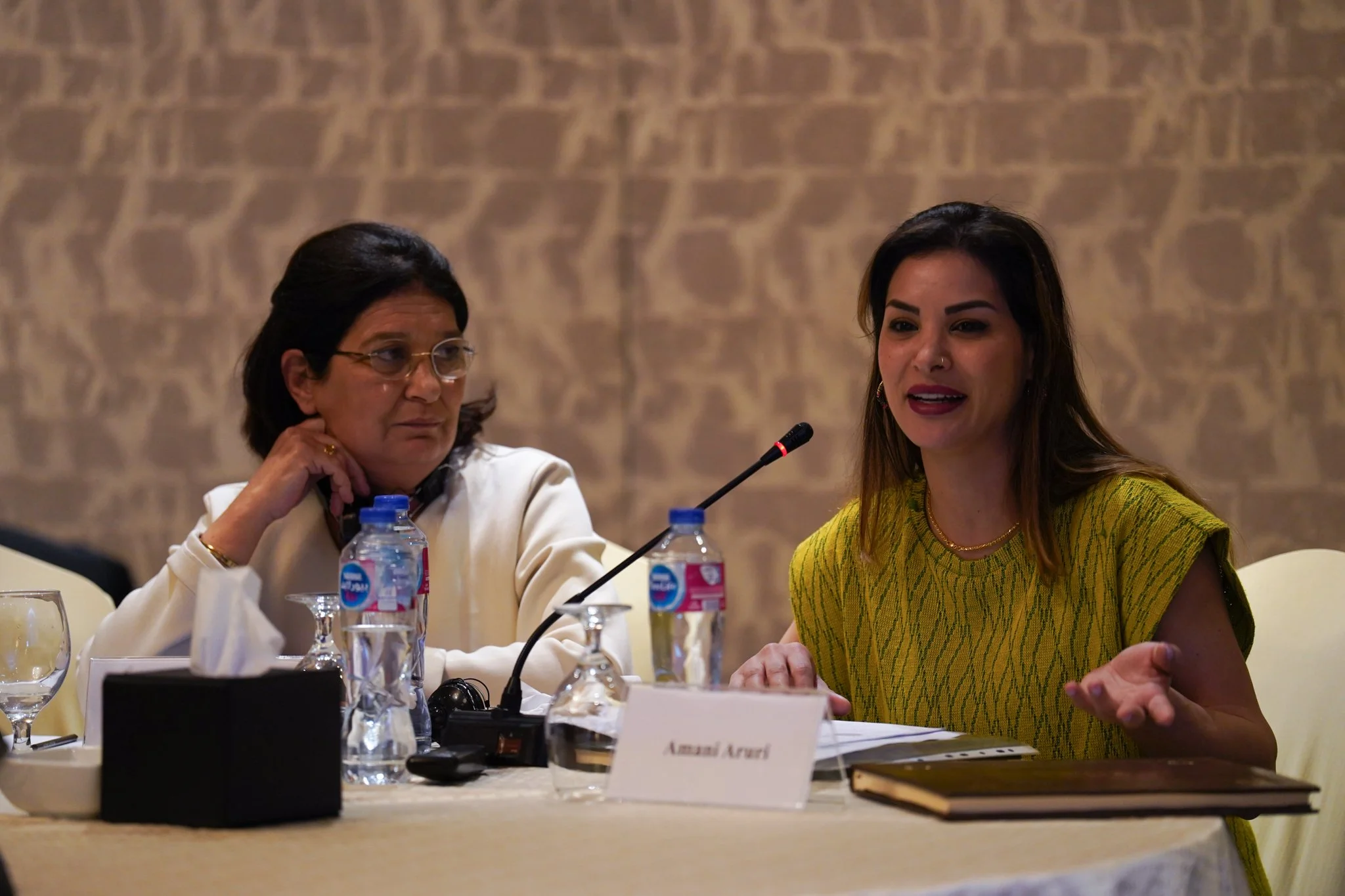
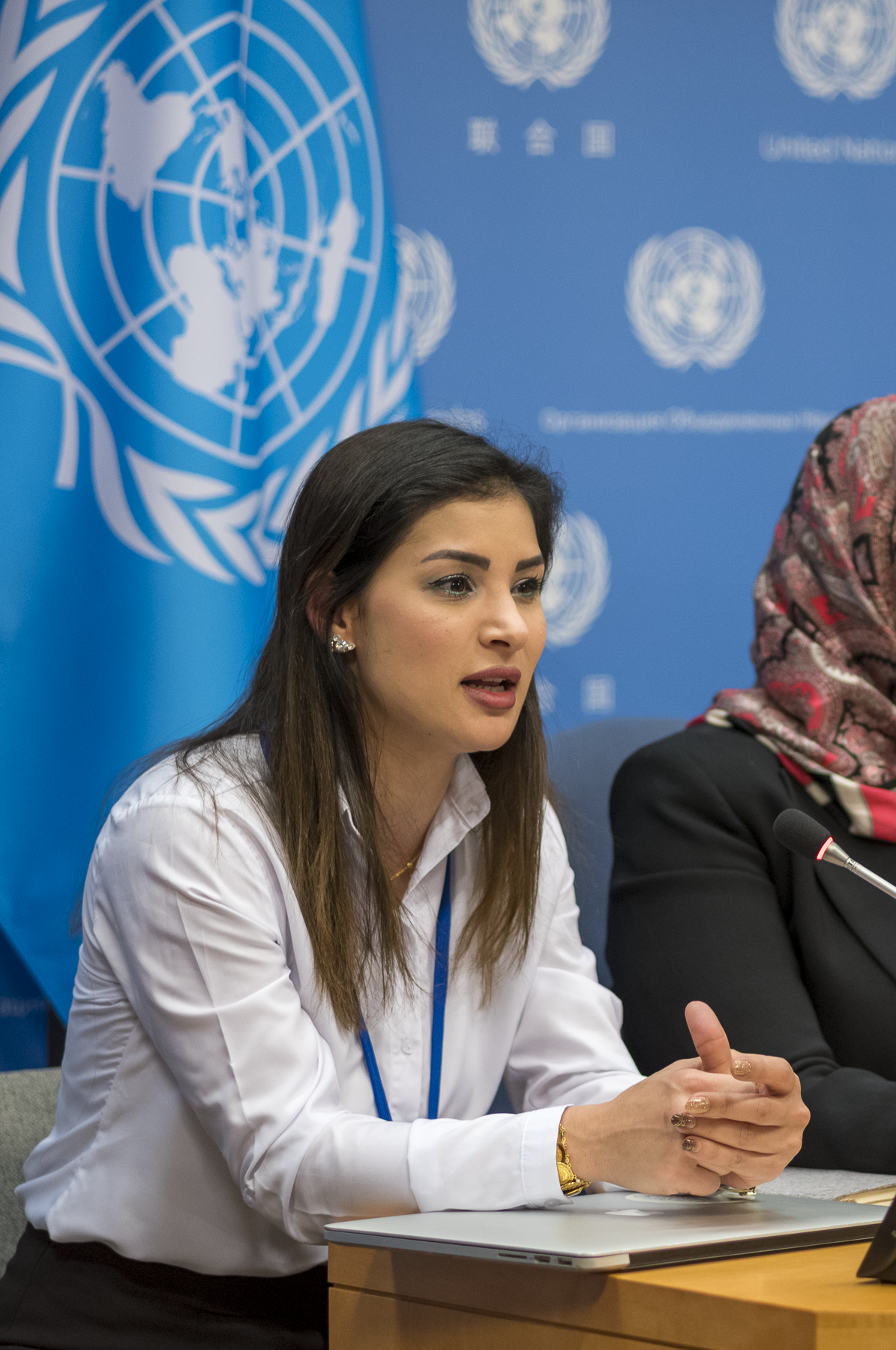
I am Amani Aruri from Palestine, I'm a feminist and youth activist and human rights defender. I am part of several regional and international platforms, working on issues like women, peace and security, and youth, peace and security both as they relate to Palestine in specific and the Arab region in general.
The Beginning of Intergenerational Movement Building
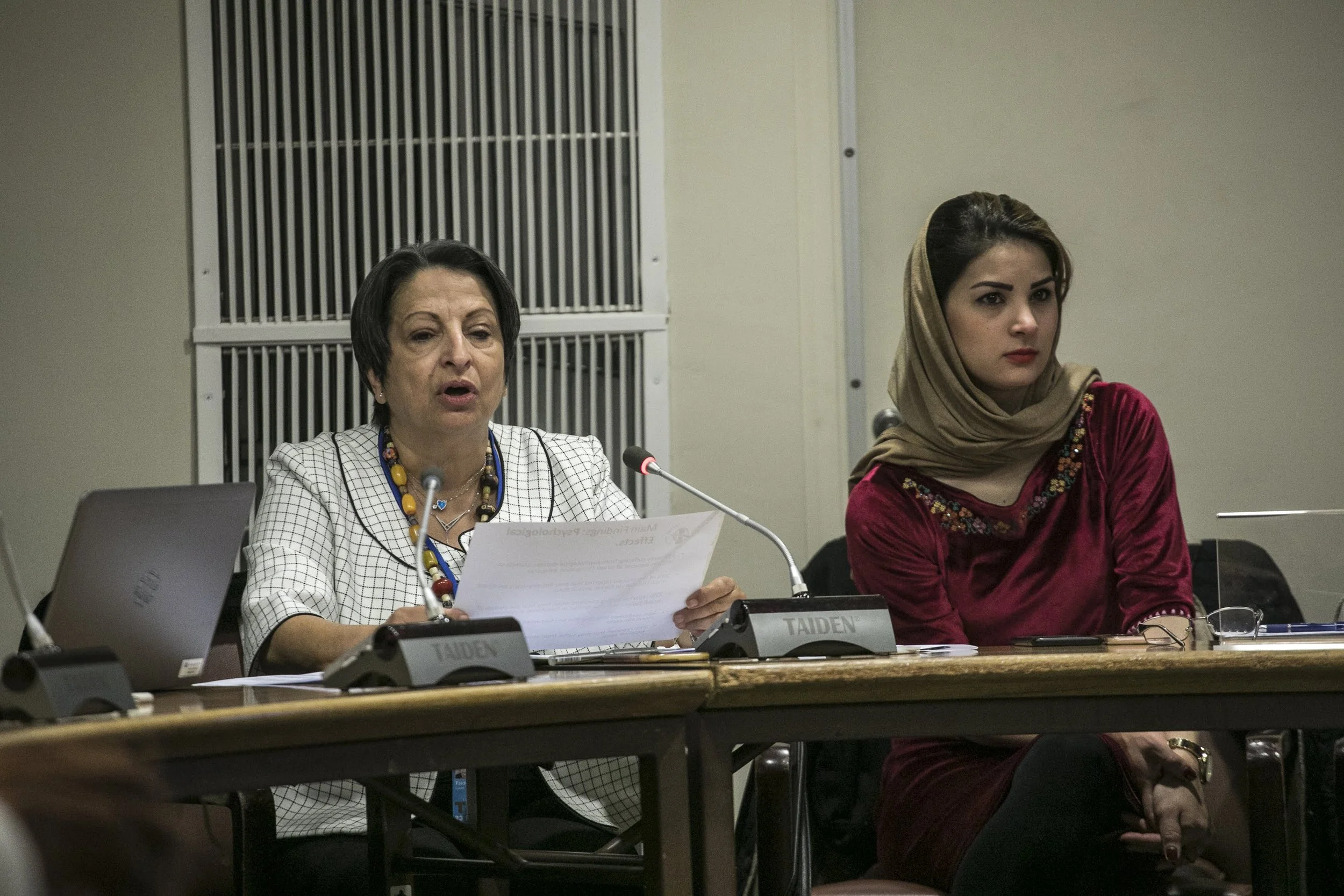
I have been involved in Karama since 2017, when I first represented WCLAC, the Women's Center for Legal Aid and Counseling in the first meeting. It was a regional meeting that brought together the different generations of women’s rights activists in preparation for initiating the process of intergenerational dialogue.
To set up that dialogue, to include younger people, to prepare them, this was an unprecedented process in our region. It is something I have continued to be part of until the present moment, as a permanent representative of the youth, peace and security agenda at Karama.
I have been very proud of all the work I have done with Karama, proud of the great impact it has had in the region, but also at the international level. The work has been able to amplify the voices we had and the level of impact we have. But the most outstanding piece of work and really the closest to my heart has been the Karama’s adolescent girls program.
This work has taken an incredibly innovative approach to work together for girls and with girls, and to achieve the rights and the protection of the rights of girls. This is something that is not really covered in our region.
Karama has been so important to me, connecting me to international mechanisms and frameworks and platforms. It was through Karama that I became one of the committee members for the Women, Peace and Security and Humanitarian Action Compact. Karama was actually the cornerstone for the establishment of the compact. I was one of the Selection Committee for the private sector and civil society sector, but also member states that could join the compact, and this came, after huge efforts made by Kanama to invest in my capacities and to prepare me to better represent the region, and the youth sector specifically.
For me it was really unprecedented to be put in such a high-level decision-making position, to feel equal to other representatives from other countries, no matter where they come from. As a young woman and specifically as a Palestinian, we really feel excluded from international platforms. But this time we had an equal voice, and it led to the recruitment, and to also to have several organizations and entities joining the compact and ensuring their equal representation, and ensuring that their voices were present and heard
I have been engaged in activism from a young age. In the beginning, I found it a bit shocking because of the resistance that I faced myself. But I also realized that most young people in the region, especially young women, face huge resistance at the beginning. There is a culture and stereotype in general about the capacities and the capabilities of young women. It is because of the patriarchy that is embedded not only in the society in general, but it is an institutional patriarchy that prevents young people from being engaged in decision-making processes.
Elevating Youth Women in International Platforms
“All of this has shown me that it is not enough to make sure you have your own seat at the table. You need to use that so other younger people have opportunities as well.”
Not Only a Seat at the Table
Working on the adolescent girls program was really a huge change, because I felt welcome from the beginning. I felt that I had my chair at the table, and I have an equal opportunity with others. I could express myself, take decisions and be part of the design process – not only the implementation of the projects or the program, but also to be part of the design process, to respond to the needs and to address the needs of the younger generation and to have them be partners like real partners in the implementation and in in the accountability process.
All of this has shown me that it is not enough to make sure you have your own seat at the table. You need to use that position to expand that, and to make sure that other younger people have opportunities as well. This was one of the main goals and the main objectives that I had from the beginning, because it was not only about myself.
I feel privileged that I had the opportunity to have access to international platforms and to very prominent constituencies, including the Commission on Status of Women and other UN platforms. But also I felt responsible for making sure that other young people in my situation and even other situations have also an equal opportunity, and they have access to these platforms to allow them to amplify their voices, and also to address the challenges that they're facing and to be part of the decision-making process, and the design process of how these challenges could be addressed, and of course changed. We need to create opportunities for them.
It was a mission for me to spread the word and to bring people to this table as well, and to make sure that people know about what platforms exist that allow them to be part of these processes, and how they can make sure that they have the required skills, the capabilities to be able to effectively communicate their messages and to amplify their voices.
Uniting Activists and Movements
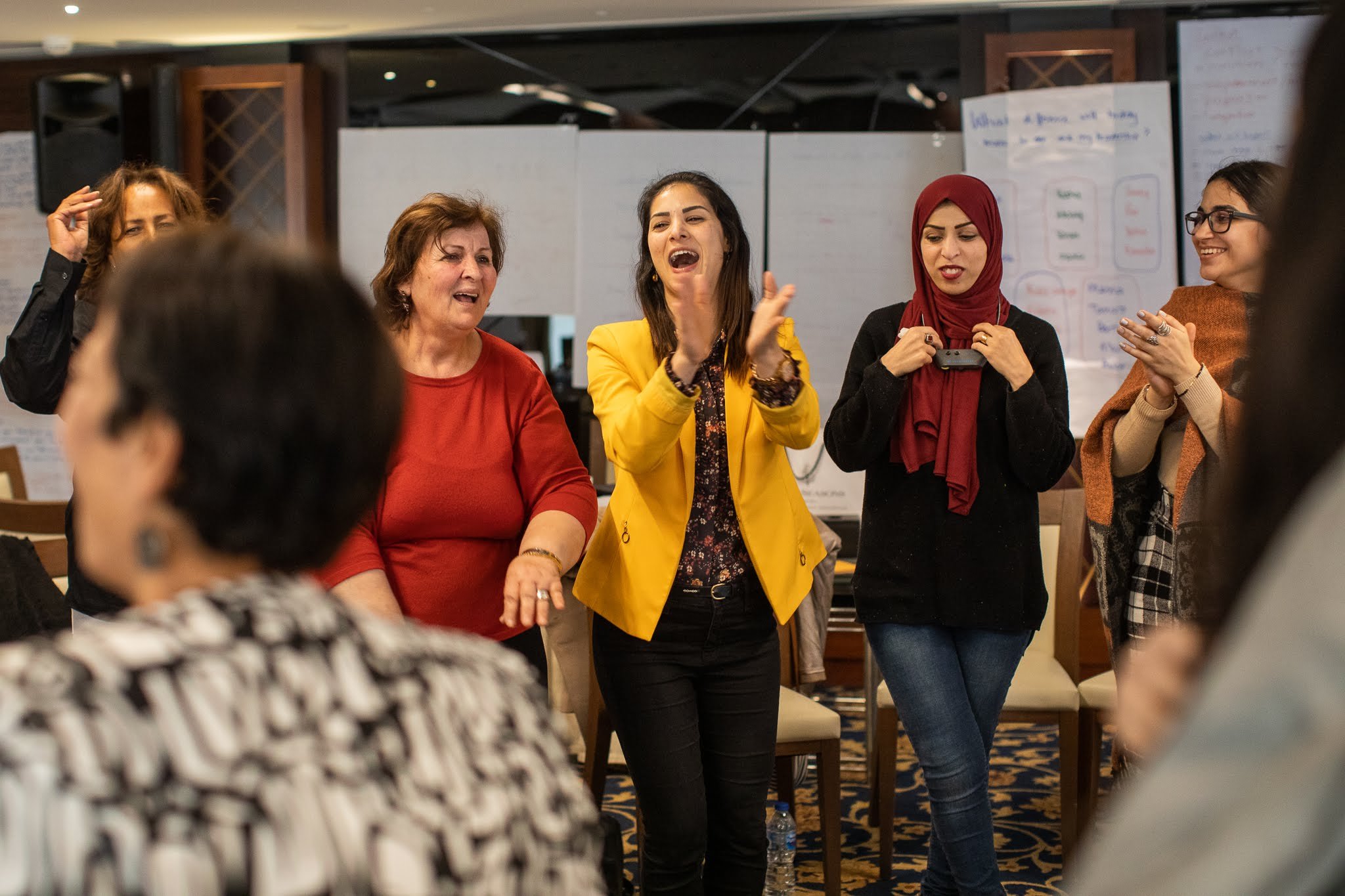
In my context, we have a strong women's movement. But, honestly speaking, the main problem that we have is exactly the same as other movements all over the world, because we cannot have one voice. It's a movement that includes different and various voices coming from different backgrounds, from different communities, it's not a homogeneous group. The scatteredness of the movement is one of the main challenges that used to prevent us from having our message delivered to the key decision makers and key actors. Karama has brought all of these actors together from different, strong backgrounds and from different fields.
We have organizations working on youth, organizations working on violence issues, some organizations working on women, peace and security. So we are representing and we are contributing to different components of the gender equality agenda as a whole. But Karama brought together these organizations and these actors, not only as organizations but also as activists like myself. It brought them together to really complete this piece of work that is very impactful as a complementary approach. It's not a competition. It changed the culture. It changed the perception about women's work: because most of the countries in our context are donor dependent, and the perception has been this is bringing and or imposing the Western agenda.
Taking ownership changed the essence of the feminist work fighting against colonialism, fighting against corruption, and fighting for women's rights and for equality, for the liberation of our nations. It put us all on the right track, and ensured that we are working and fighting so hard towards achieving our mutual goals. Mutual is, I think, the key word for this. We are coming from the same region, as women and as societies, we share many challenges in our context. So we relate to each other's experiences. Having Karama making these organizations and these actors organized and working in a complementary approach supporting each other – actually working hand-in-hand. It is very important.
This is why Karama has been developing and amplifying voices from across the generations and the region. It is why it has been extending the work beyond the Arab region, but also at the international level. And this is why we have sustainability ensured. It is not about a project. It's not about having a manual that we are following. No, it is a bottom-up approach.
The work of Karama responds to the issues on the ground from all contexts in the Arab region, but also makes sure that we are connected to the larger world, the feminist movement, but also political movements, social movements all over the world.