
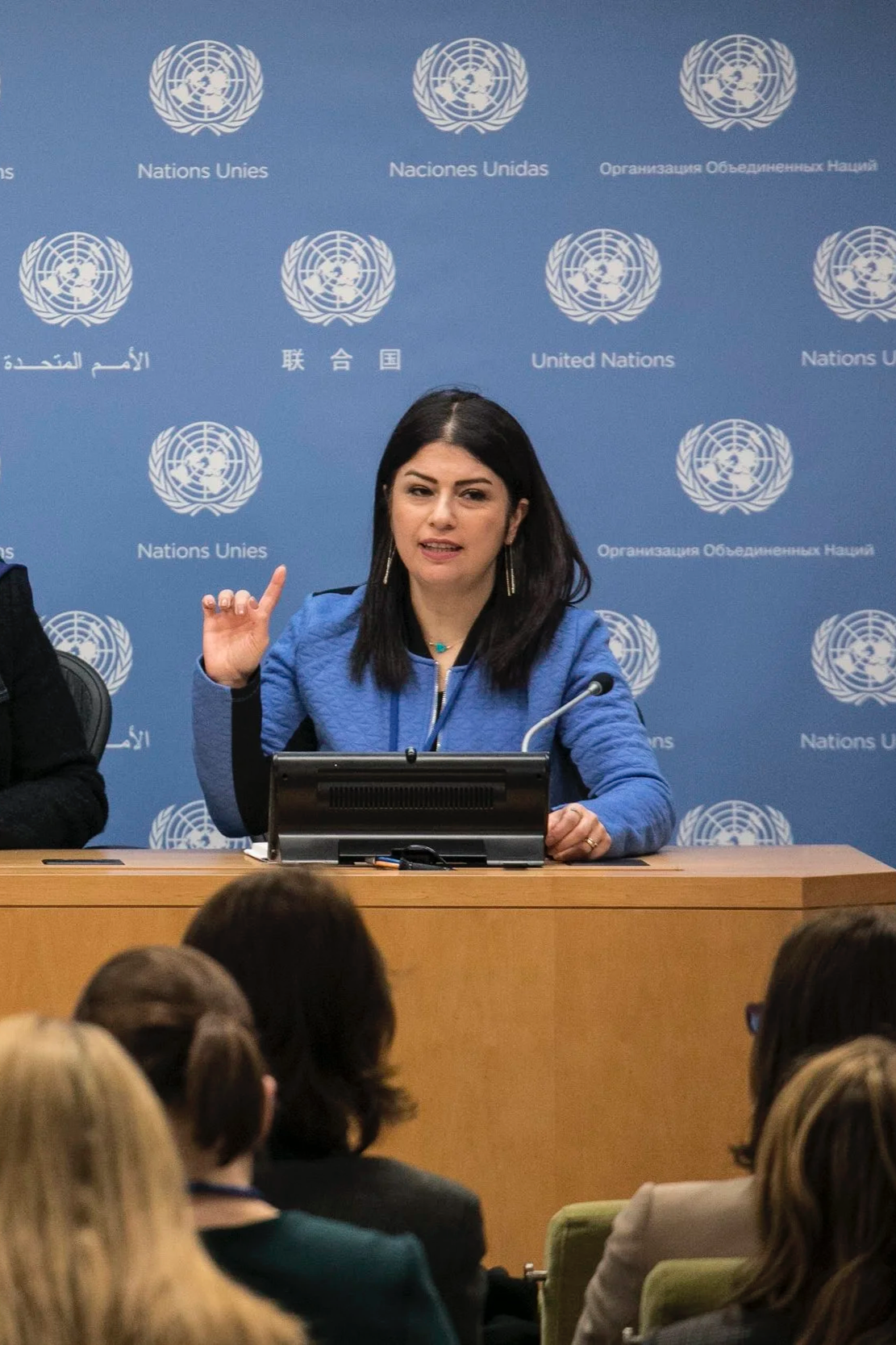
Brigitte Chelebian
Brigitte's work in has opened access to justice for all women in Lebanon, including some of the most marginalized and vulnerable groups.
I am a lawyer and the founder and director of Justice Without Frontiers in Lebanon, which is a human rights organization that addresses human rights issues from a legal perspective. We do this at three distinct levels.
Firstly, we work at the individual level. We provide services to individuals, running legal awareness sessions for women and young men. We provide free legal services, legal consultations, and court follow-up. We also created a group of legal assistants, or ambassadors for Justice Without Frontiers, who help us raise awareness of the law and rights in the regions.
Secondly, we do a lot of work at the level of ministries, government and official departments, at the level of lawyers’ unions, and at the level of security institutions.
And thirdly we work with local and international associations, schools, and universities. The goal is to raise awareness and advocate for issues that affect people without respecting boundaries.
Developing and advocating for new policies and laws is a crucial part of our work. We have worked on ways to improve legal response to issues like cyberbullying and harassment, to child custody, to undocumented persons, and economic support or economic empowerment for young men and women in Lebanon.
I have been working with the Karama Network for more than 10 years.Through Karama, I have been able to participate in a number of meetings right across the Arab region. Being a part of the network has been so important for us at Justice Without Frontiers. Karama has been organizing the most important regional meetings that take place, and has meant we have been able to participate at international level, for example at the Commission on the Status of Women at the United Nations.
Being able to participate in meetings at that level has been such an important step in our work, and it has meant we have been able to build partnerships and greater cooperation at this level.
Through Karama, JWF has implemented two very important projects: one related to human trafficking and another related to access to justice. We are currently also working with Karama on feminist foreign policy.
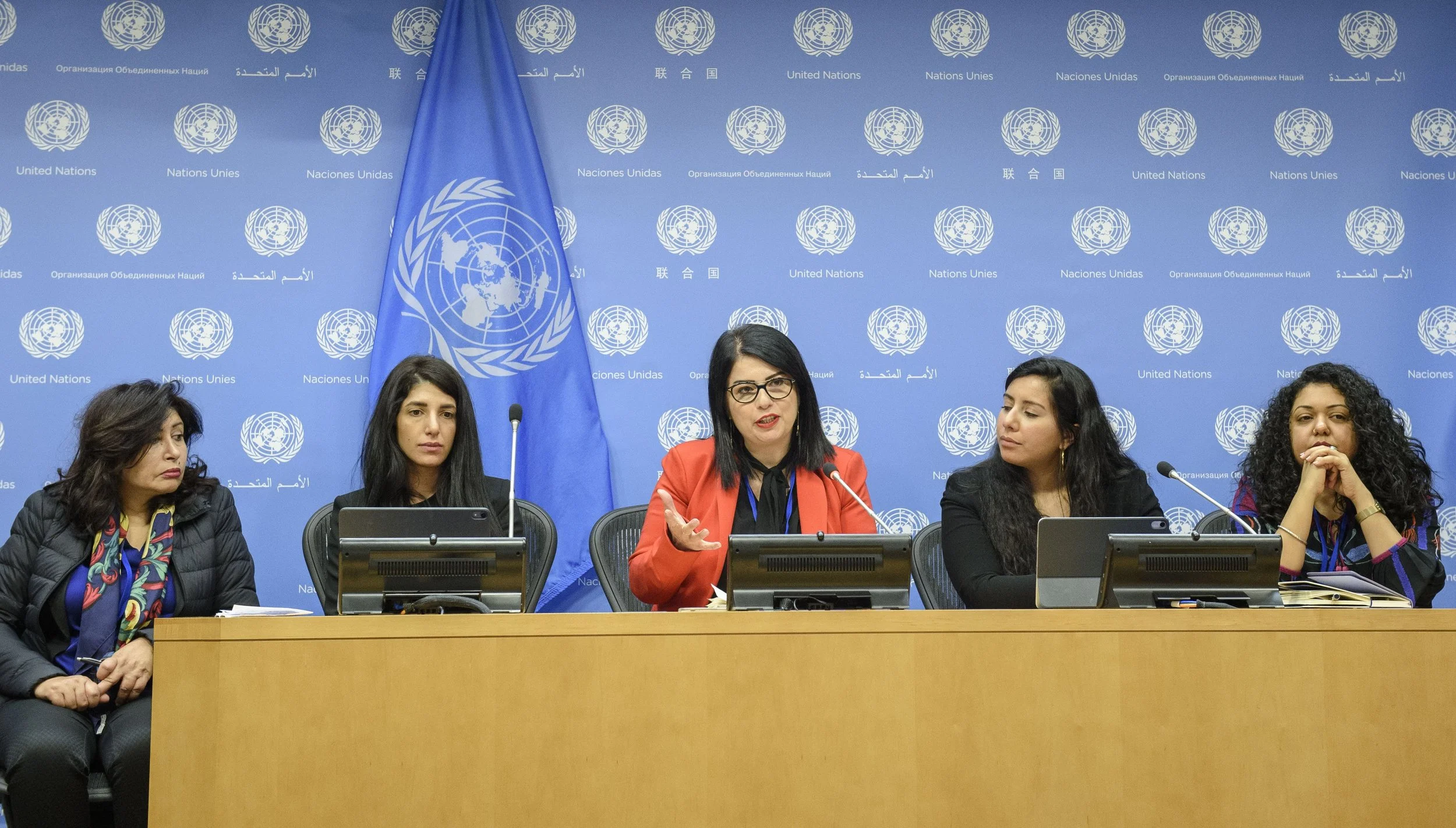
Photo: UN Photo/Loey Felipe
Part of a regional feminist movement
It is really important to recognise that the women’s movement, not only in Lebanon but also in the Arab region, has achieved many great successes on several levels. Perhaps the most important of which is the role it has played in addressing discrimination against women and girls under the law.
That struggle to amend and succeed in amending some of the laws that are unfair to women, or adopting other laws has been at the core of the women’s movement. For example, we could give the example in Lebanon of the domestic violence law, the sexual harassment law, the great struggle that is taking place to raise the age of marriage and other issues. This is a struggle that tells the story of the women’s movement.
There is also a vital feminist struggle to ensure political participation. Women have a role on many levels, especially their participation in decision-making and their participation in peacemaking.
The adoption of the national action plan for the Security Council resolution 1325 has also been a great milestone, and has had an impact for women and girls affected by conflict. We are still suffering from challenges, but there is no doubt that especially in countries where there are conflicts and disputes, the voice of women is what conveys the issue most clearly and powerfully.
Across the region, women’s groups are playing a very important role - and let me say they may even be fulfilling the role of the state in certain places.
Being part of a network that includes associations from various Arab countries - organizations and activists, women human rights activists from various Arab countries, has such importance. It has endured through so much, it is not about one project or piece of work, it continues.
And this is what creates belonging to this network, what is it that is working on a specific issue, on women’s issues, where we can all be present together, working on these issues, and we can continue together, not that it is something that only lasts as long as a meeting, with each person just going back to their country.
I am very happy to be part of the Karama network. I'm not there just to participate in the meetings, but I feel a sense of belonging to Karama.
One of the projects we have worked on addressed human trafficking. This work was very special because we were able to build a partnership with the Internal Security Forces and the Ministry of Justice, and spread awareness, and to raise awareness, we made a film about the impact of this issue. So we were able to work at all levels.
That project has been very successful.
We are still working on a very important program funded by the UN Trust Fund, which is trying to open up access to justice for marginalized groups.
We worked on this project in Lebanon during a period of many major challenges, including COVID, the economic crisis, and the war in the south of Lebanon. But despite all these challenges, we were able to achieve success and build important partnerships, including with the Ministry of Social Affairs, the Ministry of Justice, and the security institutions. We were able to focus a lot on the issue of justice.
Perhaps one of the most important successes we have achieved is that we were able to introduce the concept of justice into relief work. It is one of the works that we must focus on during conflict.
Justice is very important during relief work. Let's say that justice for us it is a matter of national security. I must emphasise that our success with this project under these difficult circumstances is also because of its partnership with Karama. They gave us support. Karama and we were one team, one partner.
We were able to help and support each other, to appreciate this same project and this program, and to achieve these great successes, in light of all these difficult circumstances that Lebanon is going through.