Faiza Jama Mohamed
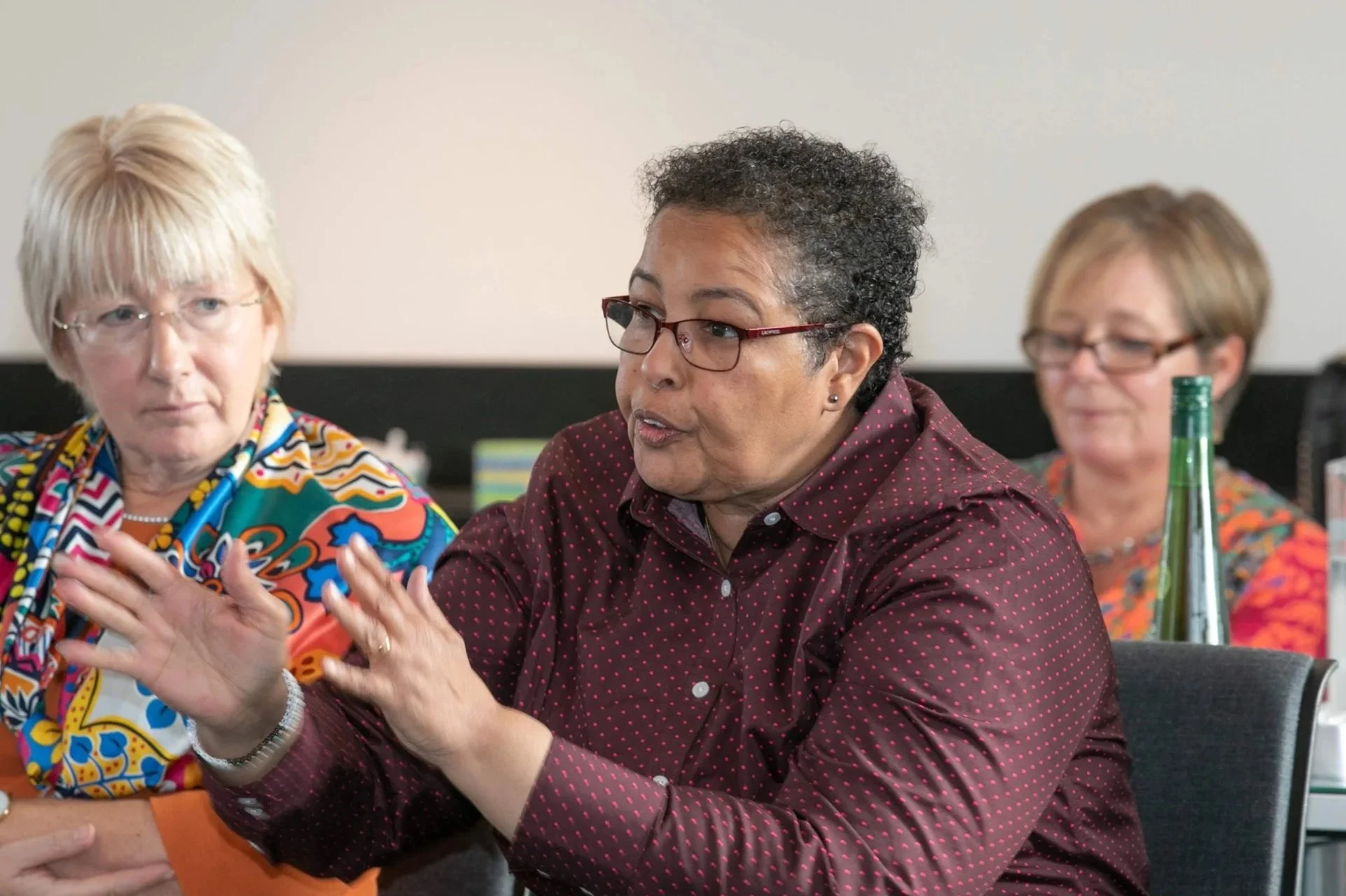
Faiza’s activism has expanded her from work in her homeland of Somalia to the Horn of Africa, and later as Africa Director for Equality Now, the entire continent and the wider world. Here, she talks about how her membership of Karama has supported her efforts to promote South-South cooperation.
My connection with Karama came through Hibaaq, who I have known for a long time. At one point, she was serving on the board of directors of Equality Now and she actually introduced me to Equality Now, and we have worked together for a long time.
Her initiation of the Karama network was a very important point, because I know she has also done similar initiatives in the past that are still successfully ongoing now. So I'm happy to be reflecting now, celebrating the 20th anniversary of Karama.
I remember back further when Hibaaq was setting up the Strategic Initiative for Women in the Horn of Africa (SIHA). At the time, very generally women from the Horn were absent from the other movements. So Hibaaq wanted to inspire them into coming into some sort of a movement that collectively works together for the benefit of all women from the Horn. As a woman from the Horn of Africa, I was keen to be part of that initiative as well.
SIHA is now running, based in Sudan, Uganda, Ethiopia, Somalia - all the members are in different places. And they continue to advocate for the rights of women in the Horn. And they are still doing a great job.
When Hibaaq decided to launch Karama, I was working with partners in Egypt, and found Hibaaq there, where she informed me that she is going to start this network for women in the Arab region. Again, because she didn’t see collective groups working across the different countries. There might perhaps have been coalitions specific to one country or one or 2 or 3 countries, like the Maghreb, maybe they had their own, different programs or coalitions. But, when it came to linking up with the rest of the region, it was minimal. This was missing.
So it was a good initiative to build a coalition, or a network that could facilitate women across the Arab region to come together and voice their concerns and work together to make change, for the better of all women in the region.
Partnership opens doors
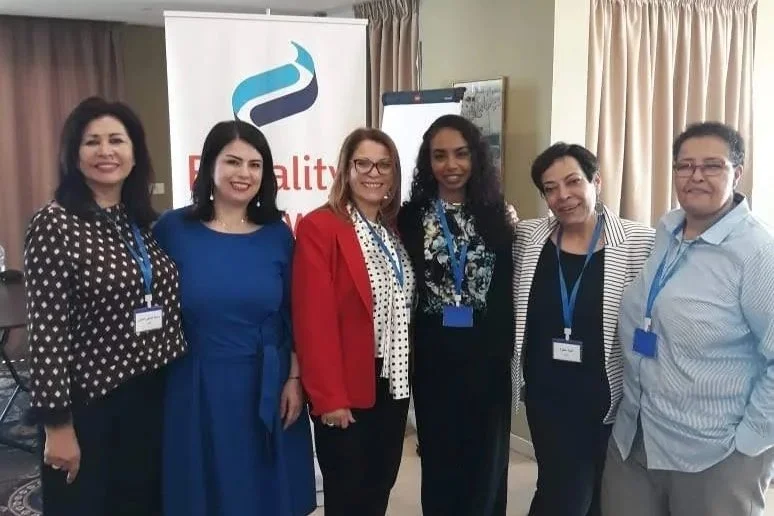
Having Karama bring together activists from this region had a positive impact for my work at Equality Now. We were having a challenge to link up with women from the north of Africa, whereas the Equality Now office in Nairobi had connections with the rest of the regions in the continent. It was a challenge, connecting with women in the Arab region who could work with us.
Even though a number of Arab countries are in Africa, we found that because of language they prefer to work more closely with women in the Middle East, for example. And so Karama was a place where I could meet with different women, talk to them about what we are doing and how we would be keen to collaborate with them, for example on the African Protocol on the rights of women in Africa, known famously as the Maputo Protocol, which is an African Union treaty.
Back in 2018, Tunisia, for example, had not ratified the Maputo Protocol. And so we needed to bond with women from that region so that we can work together to get those countries to also ratify the Protocol.
Without Karama, I don't think I would have been able to succeed, to have that connection.
That's the platform of Karama that brought us together, made it possible for us to connect. Until today, we are working together. Even as we speak, Samia Fessi, who is a member of Karama from Tunisia, has joined the African Union Commission to go to Egypt to advocate for Egypt to ratify the Maputo Protocol.
Samia is the best ambassador for us to be in that space, because we would like to see women from the region pushing forward the advocacy agenda, and engaging with governments from the region. So when the African Union Commission contacted me about going with them to Egypt. I said, Samia will go with you because she's the leader of our coalition, the Solidarity for African Women's Rights, North Africa Cluster, and she will be able to continue the advocacy work after the mission.
That is a benefit that came to us through Karama. And we are leveraging on her expertise of the region, her Arabic language, to engage with the officials from Egypt to bring onboard Egypt's commitment to the Protocol on the Rights of Women in Africa.
Pan-African Activism
The Maputo Protocol is important for women because oftentimes you find countries don't put a lot of emphasis on implementation. So when the treaty was adopted in 2003, the Solidarity for African Women's Rights Coalition came together to push for all countries of the African Union , which includes some of the Arab states – Morocco, Libya, Tunisia, Algeria, Egypt, Sudan – to be part of this treaty. We need as well to ensure that every country is adhering to implementing it because they are supposed to report every two years to the African Commission on Human and Peoples’ Rights, on the progress they are making, to implement and fulfill the obligations they have under this treaty. On the other hand, we have also been popularizing this treaty among lawyers, judges and among women at large, as well as students.
We have convened moot court competitions around provisions of the Protocol to ensure that students are aware and are researching and allowing them to participate in the competition to consider violations committed against women, or a group of women, and see how they can use the Protocol as a tool to defend those rights that were violated.
So it has been a long journey. It's over 20 years now since the Protocol came into life, and we have been pursuing it to breathe life into it. And I'm glad that we have, as part of our coalition, the North Africa cluster, which is led by Samia of Tunisia, and has members from Egypt, Algeria, Libya, Morocco. All of these groups are also part of Karama. And so there is an inter linkage between Karama and our African coalition as well. That brings strength for the two coalitions to work together and advance the rights of women across all regions, both in the Arab region and Africa - this is South-South cooperation.
The connections we get with other women is important for us. Even many of the Karama members now work with us under our MENA program. We have Palestine, Algeria, Tunisia. Morocco, all of them are part of the Hurra Coalition – Hurra meaning freedom – which is advocating for family law reform. This is looking at how existing family laws in the region are discriminatory to women and how women then can overcome these discriminatory practices. That's also another level of collaboration we have with Karama members.
I believe Equality Now and Karama have the same mission, and it therefore facilitates for us to have these connections with the Arab region. Building on those, we will be able to achieve greater success in the region, contributing to Karama’s mission as well.
Karama has been facilitating, connecting, and has enabled and equipped a lot of the members with capacity to engage beyond the region, going together every year to the Commission on the Status of Women, side by side it has meant we can work together to advocate for specific issues each time.
That has been quite fruitful. And, and has strengthened the bond between us and the members of Karama.
What works well in network building is the collective voice that brings pressure on governments to deliver. And so that's why we have this solidarity for our communities’ rights, purely focusing on pushing the agenda for the rights of women in Africa. And the same thing, the Arab region coming together under the platform of Karama also is beneficial in that sense as well.
And then when you connect the two networks, they produce greater influence as well. Imagine, a group of women from different countries, participating at an African Union summit, lobbying foreign ministers, finding them in one place and lobbying them to change certain provisions of law, for example. It is quite powerful to see all these women from different countries speaking different languages or engaging with different foreign ministers. It shows them that women from Africa are coming together to demand certain things and, therefore, are able to successfully engage with them. So that has been the experience for the African coalition, and with the members of Karama who were also part of this coalition now has been a greater success in terms of reaching far. We were not going to North Africa before, but now we have members from there who are actively engaging, and we are able to join them and, and successfully lobby countries to implement the Protocol, ratify the Protocol, depending on where their country status is.
We are using opportunities like Beijing +30, the Sustainable Development Goals, and similar moments like that to keep the pressure on countries to deliver before the deadline emerges. With those opportunities, we are able to collectively work together to push the agenda forward so that all women can benefit from the outcomes or investments that are made to promote their rights.
Partnership through tough times
Thinking about the last 20 years, the togetherness is one thing that cannot be underestimated. The collective actions. And then, when it comes to the Protocol, many countries have ratified it. So out of 55 countries, 46 have ratified it, which means that we have the majority of countries who are committed to promoting the rights of women. We see now that many countries have developed laws that are compliant with the Protocol.
Where we lack most is proper implementation of these laws so that they can serve the purpose for which they are set up, to be a deterrent for prospective violators, to see that they can be punished if they do something wrong, something against the law.
But these last two decades have also been painful. We have experienced wars, what's going on in Sudan, for example, everything you invested in and hoped to realize is thrown into doubt. When people are displaced and when wars happen, of course, the priorities change.
That's the big obstacle. When what is happening in Palestine, where countries are not observing international law, that also has an impact in terms of the work we do. If international law is not working, then many countries will feel less obliged to be held accountable when countries like the US and Israel are not following international law.
So it has been a big challenge to our work of promoting the rights of women. We have hope and we have seen that you can't give up on anything, if you do, nothing works then. So we continue despite these challenges, and we'll make small successes, sometimes big successes. But we are also prepared to see that in some instances, things might collapse because of huge conflicts that emerge.
The regular contacts among the members of Karama is so important. Outside that also, organizations within the membership directly working together. That's what Karama stands for, enabling them to work together, enabling them to be strong and have the capacity to deliver. So I think that's something Karama should continue encouraging, and building the bridge between Africa, and the rest of the region is also something important and will go a long way in terms of promoting the rights of women in both MENA and Africa.