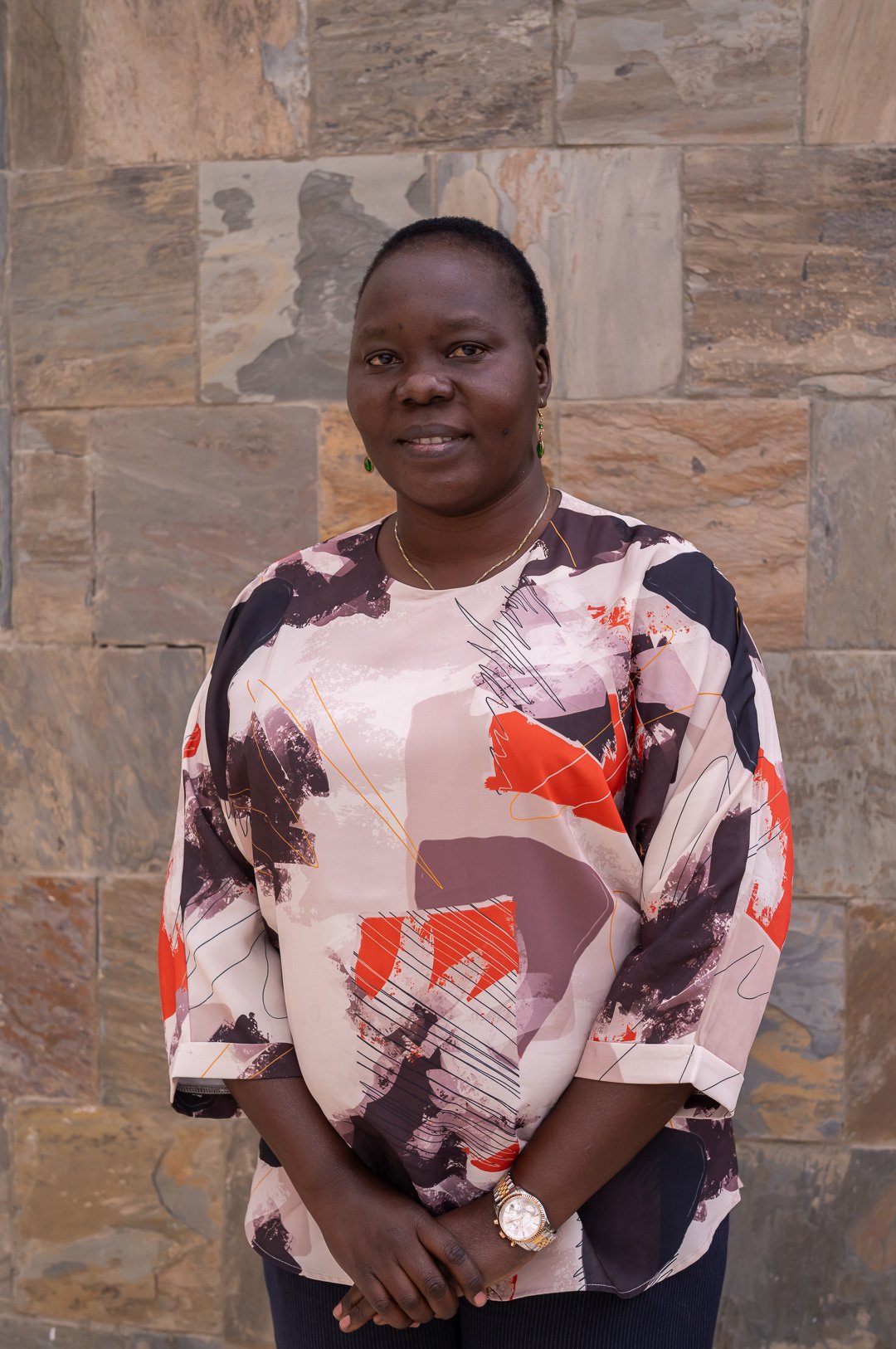
Jackline Nasiwa
Jackline and her organization, the Center for Inclusive Governance, Peace and Justice (CIGPJ) are working to strengthen the institutions and polity that South Sudan needs to build peace, stability and democracy. As the state works to draft its constitution and implement a peace agreement, Jackline is working at local, national, and international level, expanding capacity of both institutions and civil society. Here, she talks about that work and how Karama has supported it.
I have been in activism for the last 20 years. I came to it from the university. Then I started working in South Sudan before independence. Through that time, progressively women have been navigating their participation with enormous challenges, struggling against cultural biases, stigma, and also a high illiteracy rate.
Traditionally, women were not in leadership positions or decision making. And we are in a highly militarized system of governance. I say for us, women don't carry the guns, we carry our voices.
With the Karama project for the last 5 years we have been amplifying those voices. I say that in our advocacy, either you are on the mic, or you are on the keyboard. That means we were able to provide grassroots women with a keyboard, and then also women in some of the civil societies, and the rest were able to put their hands on the keyboard. And today we have more women who are outspoken, and they look at us like mentors, and look to us for guidance in terms of what needs to be done.
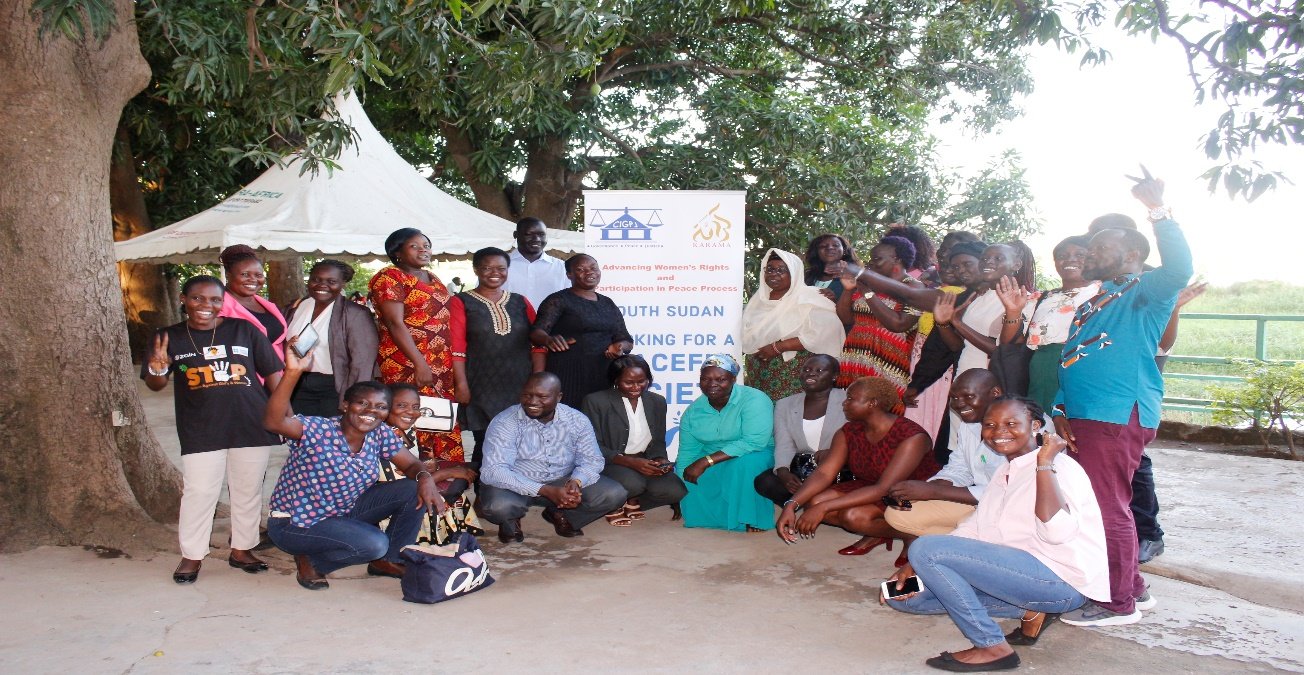
Growing our work for women, peace and security
For the last three years, my organization CIGPJ has been working with Karama on a project focused on the women, peace and security agenda. The work is advancing women's rights in peace processes and political processes and the goal for CIGPJ is inclusive peace, justice, and also governance, which entails women leadership, incorporating the women, peace and security agenda.
The women, peace and security agenda is really significant for what CIGPJ stands for, and in terms of the peace process CIGPJ has been in the forefront of advancing peace. We have been lobbying for peace at the grassroots level, and national, regional, and international. The work that Karama is doing supports us to be able to achieve the goals that we aspire to.
Before we started working with Karama, most of our work was at national level, but not with policymakers per se. We were not able to build the capacities of policymakers. We were not able to have dialogues on key strategic issues of affirmative action for women, mainstreaming gender in policymaking and peace processes, and also supporting parliamentarians in terms of building their skills on dialogue and also on consultations.
The project has also strengthened us as an institution in terms of our work around peacebuilding, and also building capacities of civil society, so others are able to advocate and influence change. We are strengthening policymakers, making their decision making inclusive and based on the foundation of human rights and justice.
Making parliamentarians effective
With our multi-year Karama project, we were able to reach around 500 MPs at the national level, through dialogues, through training of trainers, through awareness raising and also through advocacy.
South Sudan currently has 532 MPs, and I could say that at least 500 of them have been impacted with this project. It has also strengthened our relationship with the parliamentarians and policymakers, they now look at us as technical experts able to support them in legal analysis, gender analysis, and also finding policy options for the legislative drafting processes going on in the Parliament. Specifically, we looked at the legislation around the constitution-making processes where we had a legal memorandum, and a gender analysis of the Constitution-Making Process Act.
We have looked at the Elections Act from a gender perspective, at the law on affirmative action, and others, like family law and anti gender-based violence. We have published analysis and then the policy briefs.
Then we have had dialogues with members of Parliament, making sure male allies are also part of these conversations. Critical for this was the training of the young parliamentarians, supporting them with understanding the constitution-making process, what they want to see in the Constitution. We were empowering them to know what the role of young Parliamentarians could be.
This has helped them to be able to understand the constitution-making process and their role as a Parliament. Together with the other Members of Parliament, they were able to say that they want to now go to their constituencies to talk about the constitution-making process, and to include budget for MPs to be able to engage in the decision-making process.
These are things that have cemented our relationship, empowered the MPs to get engaged in critical issues of human rights in constitution making, and also women, peace and security.
Some of the MPs we train were able to use these skills for the first time. We have been able to go to their constituencies and have dialogues around elections and constitution-making. Some of them even became the point of reference for referral pathways for gender-based violence in the communities. When it happens, they call us and say ‘we have this gender-based violence case. What can be done?’
We have participated together with them in radio talk shows. Initially, women politicians were scared to speak about certain important issues, including even issues of gender-based violence or affirmative action, for fear that as politicians, they are not supposed to talk. But through this training we have seen them also amplifying their voices, demanding action for protection, demanding peace. They are working together with us in calling for women's rights.
That's a big change from my perspective — Members of Parliament have joined the voices of civil society in asking for women's inclusion and participation in peace and political processes.
Collaborating to fill legislative gaps
Identifying the gaps and the opportunities for us to support MPs has been an important part of the work. When we talk with them, first we talk with their leadership. We start talking to the parliamentary institutions, the Committee for Gender, the Committee for Human Rights, Committee for Peace and Reconciliation Committee for Agriculture, and also the office of the Chief Whip.
In those initial conversations they give us ideas of where their gaps are, and what they might be, and we assess it.
Through the work we also participate sometimes by following-up on bills in Parliament. We see the bills put forward, assess if they are good law or if they may require a lot of review. Our partners in parliament could also raise up their hands when deliberations of bills are going on.
We intentionally decided that we need to build the capacity of parliamentarians on legislative drafting. What they need to see as a benchmark for legislation: inclusion of human rights, gender inclusion, and also oversight and implementation of the bills. We developed our analysis and then share it with the MPs. They now have the knowledge. When these bills are brought before Parliament, they are able to raise their issues and also make contributions to the bill.
Sometimes they engage in their own lobbying within Parliament, lobbying the legislative drafting committee to include issues of women in the draft, either budget or laws that may come before the Parliament.
So we co-create with them in identifying the gaps. But we also monitor and analyze their participation, and reviewing the law shows us that there are some gaps, and those gaps can be filled when legislators become active, and they understand where these gaps are.
A feminist constitution-making process
There are three pieces of legislation in particular that we have been able to have a positive impact on through our work with Karama.
One is the Constitution-Making Process Act. Specifically, we recommended affirmative action not just in terms of numbers of women in different mechanisms, but also gender sensitivity and inclusivity in the decision making process. That entails civic education, public consultation, the materials that have to be developed, and also the deliberations of the National Constitution Review Commission.
We drew examples from the region. We looked at the South African decision-making process, looked at Kenya, exploring what they were doing in terms of including women in the consultations in civic education. How were they capturing women's views and including them in the process?
We also look at the substantive issues in the constitution-making process, especially that the text should be gender sensitive. We came out with a publicised called Mainstreaming Gender in the Constitution-Making Process. That is what we were able to share with the MPs and also lobby for inclusion in the decision-making process act.
As a result of this project, I also have been personally consulted by the mechanisms of the peace agreement for technical support. We have developed fact sheets for the Constitution-making process, and we have developed a toolkit for public consultations. We want to use those materials to continue to build capacity in this mechanism so that they can expedite the processes of constitution making and also start the electoral processes.
Shaping the Political Party Act
For the political parties, we also assessed the leadership of women, looking at the high-level decision making of each of the parties. From this we are clear we need to have enforcement of affirmative action in the Political Party Act. That means for a party to be properly registered, they have to conform to 35 per cent participation of women in the highest leadership of the party, and also in the membership, and in internal processes, such as the voting or the primaries within the political parties.
We said that a party who cannot conform to affirmative action and to the 35 per cent quota of women’s participation should not be registered. And this was also included in the law.
This is how we were able to influence the Political Party Act. We had a specific conversation with the chief whip, where I took her through the gaps we saw, and had this conversation also with other groups, and when they went to Parliament they were able to raise those issues. In our process of the peace agreement, the drafts that are brought to Parliament are not supposed to be changed, because there's the National Constitutional Amendment Committee that is entrusted to draft, and that committee comprises of the political parties who are signatories to the Agreement on Resolution of the Conflict in South Sudan of 2015 (ARCSS) and other stakeholders.
I influenced the Parliament and told them that, look, your role is not only to endorse legislation or policies that come to you. But as a Parliament you have the doctrine of separation of powers, and you have the right to legislate, and that means that you have to deliberate and also review bills before you adopt them. So if you are to endorse bills and adopt, then they become provisional. But if they are to become acts of law, they have to be deliberated and adopted.
So they took that up and initiated legislation around the requirement for membership of political parties, which was by then 300, and then they raised it to 500. Some of the parties refused, and they said, ‘oh, this is too strict’, but I told them that if it is less, then we are likely to see a lot of ‘briefcase parties’ who may not be able to deliver. If you set the bar high, they can forge coalitions and so forth, and they can be able to become formidable political parties for a democratic processes. So they took up this recommendation. When they initiated it, some of the party members rejected it but at the end of the day it was passed, and now we have the higher threshold in the act. They also initiated the requirement for affirmative action within those bills.
Strategic influence on the Elections Act
Thirdly, we have been able to influence the Elections Act. We did a lot of comparative analysis of regional experiences. Our focus was on affirmative action for women's participation in elections, in oversight mechanisms for enforcing the quota during elections, and analysis of electing women through dedicated women’s seats rather than political party lists.
From that analysis of the region and our experience of the 2010 election, we found that more women reach parliament if they are elected via closed lists [where voters select only parties, rather than candidates].
This is what we proposed but it was rejected - including by some women who actually agreed with the principle. We are working with some policymakers from the Council of States, and others also who are reviewing the current Elections Act, and these factors are now addressed. We are hoping that when it comes to Parliament women will be able to come from a closed list.
The peace agreement is based on power sharing by politicians, and the parties involved prefer to have men representing and overseeing them, so fewer women are in the mechanisms. But through a closed list, more women will be sent, regardless of their political affiliations and backgrounds. This is the strategy that we use, and some women policymakers, some men are even buying into the idea now. We are optimistic.
Expanding civic engagement
The National Electoral Commission is also consulting with us in terms of our advocacy for civic engagement, and also pushing for support for the Electoral Commission.
One of the things for us is that if elections are to happen, we need to have massive civic engagement. People need to understand the electoral processes. They need to understand why they are participating in elections. They need to understand how they identify leaders they can vote for, in terms of their candidates’ positions that are relevant to their challenges as a community, and also that can address their priorities and issues.
This is how far the project has put us as CIGPJ, to be technical support to the peace mechanisms, and also to support civil society, who may not have these resources, and who may not also understand what it means to develop a policy.
The think tank group that we established under this project is very vibrant, and we use it as part of capacity building of CSOs on how to develop policy briefs. It supports development of legal analysis that can be submitted to official processes, to the constitution-making process or to Parliament. All these are the things that we do in building the capacity of a wider audience beyond us, so there is a wider pool able to replicate the activities in their own constituencies and using the knowledge.
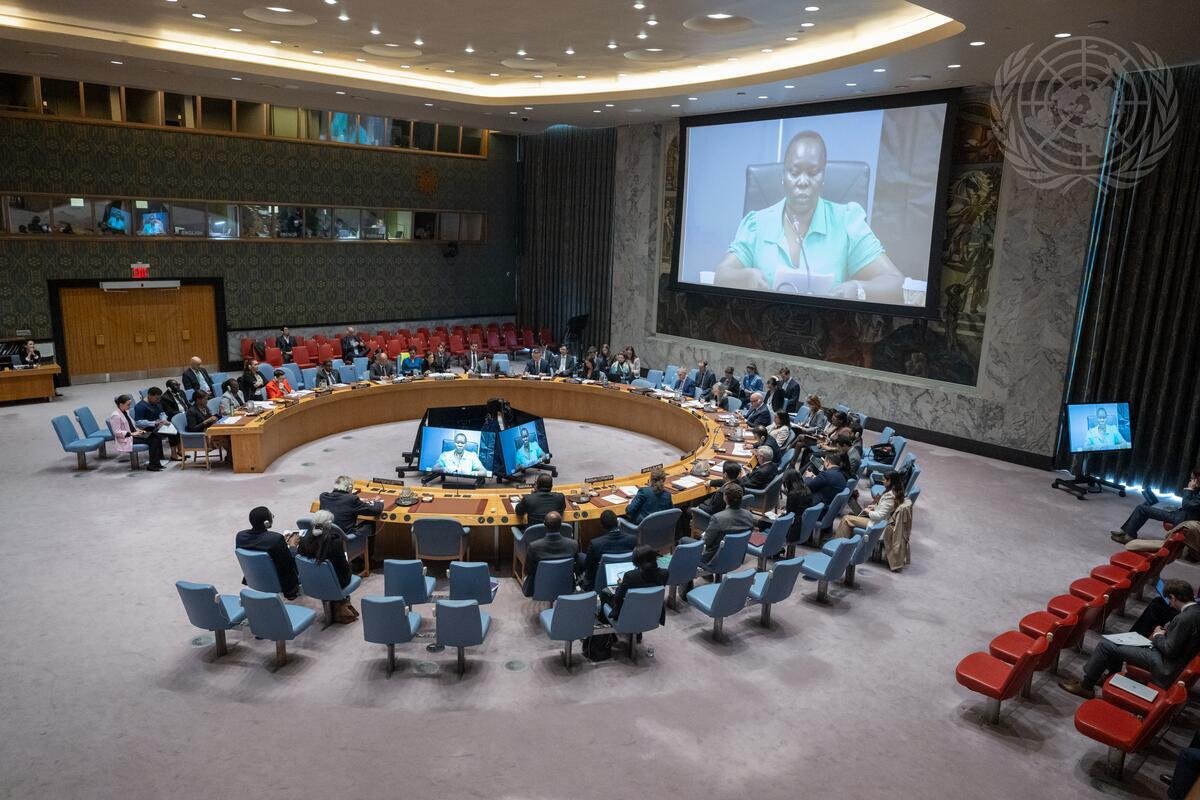
UN Photo/Manuel Elías
Making a difference at the United Nations
Jackline briefs the UN Security Council on South Sudan.
Participating in regional and international peace processes has been a challenge for me and for the organization in terms of who funds us to be able to participate in these platforms. Initially, we had some support for the African Commission on Human and People's rights, but only for a certain period. Working with Karama, we have been able to participate at CSW for the first time. I was able to accomplish a lot in terms of lobbying, and also highlighting and amplifying the voices of South Sudanese and the challenges of women peace and security in the country, and to increase contacts and networks.
I was invited to write a policy brief on the peace process in South Sudan, and it was also shared with the UN Security Council, including policy recommendations on how to salvage peace in South Sudan. I spoke with the NGO Working Group in New York, and they became supportive of me. It was through that I was invited to brief the Security Council.
We of course keep in touch with them on these issues, and they are also advocating on our behalf for the South Sudan situation. So these international platforms are really important, and without the support from Karama, I wouldn't have attended CSW, or been able to meet policymakers who are concerned about South Sudan, and particularly regarding the protection of women against gender-based violence in conflict, and also the rights of children born out of rape.
Now, there's a lot of interest in supporting children born out of rape, and this is because it was one of the issues that I was able to highlight. The Mukwege Foundation are now supporting about 60 children with school fees, and we also give income-generating activity to survivors of sexual violence. More than 250 women are now receiving income-generating activity across the country.
Women’s participation in the peace process
We were able to participate in the Tumaini Peace Initiative, where there was a challenge in terms of making the processes inclusive and bringing our voices to the process. We received short term funding from the UN, but it only allowed for a week or two. When the peace talks were suspended temporarily, we could not go back.
That means our voices and space in that mechanism was missing. The guidance that we used to give in terms of the context, analysis in terms of putting gender into the processes, analyzing the protocols that were proposed - all of this went missing when we weren’t able to be there.
I am not surprised that we couldn't salvage the process when it was collapsing. We still keep hoping that the process will be revived and maybe the whole peace agreement can be achieved. That means that we need to be supported to be at least providing technical support, not permanently, but where there are strategic conversations somebody should be able to go as a woman to represent the voices of the women on these tables.
Transcending tribal and party divides
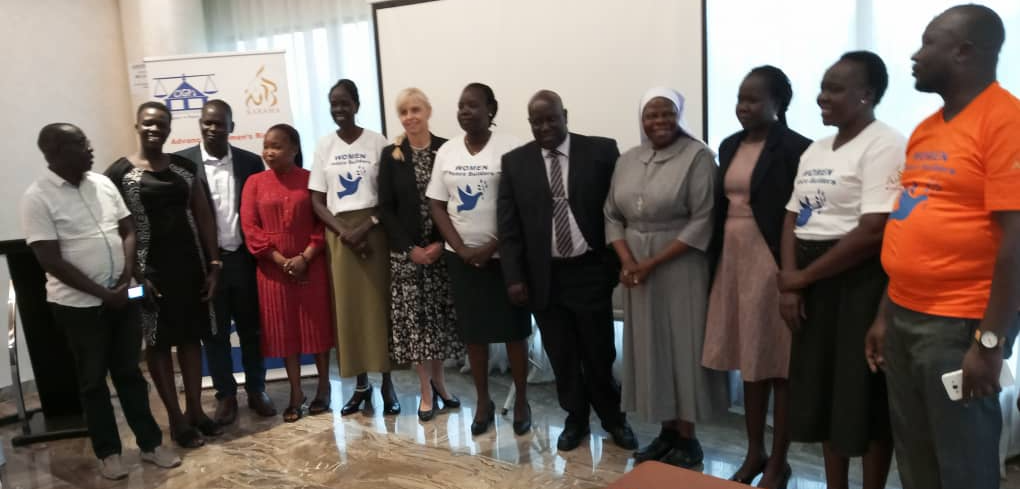
The networks that we have created include women beyond even the civil society space, to women in politics. One of the greatest achievements is that in all our dialogues and training, women from the different political parties, even male allies from the different political parties, they looked at themselves as South Sudanese. When it is an issue that comes up like the constitution, and maybe issues of peace, they say we are all South Sudanese. I was surprised when I went to [the city of] Torit, women were able to say, ‘regardless of our political affiliations, when it comes to gender, we look at who is competent to be put to become a minister, or to be appointed as a director general. As women we don't have a tribe. Our tribe is women, and our party is women. We share priorities like putting affirmative action and addressing barriers to women, peace and security and women's rights.’
I was really impressed. In some of the conversations I would ask them, what is your tribe? And then, how many tribes are there in South Sudan? And they could tell me we are 64 tribes, and I said, no, we have one tribe, and our tribe is South Sudan.
Now when I ask them what is your tribe, they say South Sudan.
When women rise, we rise
We also built on our slogans of campaigns that we call ‘When women rise, we rise’. This has become our slogan before starting an event, or when we want to give power to a woman to speak or to upload, we just say, when women rise, we rise, and when men rise, women rise higher and higher. This campaign is part of the empowerment and also building resilience of women, showing them that women can do it. We need to be in those spaces.
These are some of the slogans that we take forward and we continue to empower the grassroots women to replicate the same so that they are not left behind.
Karama is a sisterhood
The other important thing with the Karama project is that it’s about saying: let’s talk.
Let's talk about the issues that affect us as women, and we find our own solutions. I always tell them, let's wear our boots, our gumboots, and we go on the street to talk about our issues and to advance our rights. These conversations are more empowering to the women, and it gives them the sense that they have the power in them. You could see even grassroots women don't have fear.
It has helped them to build their confidence and to speak up even when they’re dealing with traditional leaders who used to be gender insensitive. The women could speak, and these traditional leaders have also become allies, and they are in the front line to champion women's rights.
Through our work together, I feel Karama is a home.
Our working relationship with Karama is one of sisterhood. I feel we all have the deed of care about each other. There's a purpose for Karama, which is more of the feminist approach, putting ourselves as women in front, and ensuring that women understand the processes and that they are able to move forward. Working with Karama has given me personally the flexibility to define the agenda of our programming, which is very different from other partners and donors. There is an understanding of the context and a structure that means we design our programs for the context, it’s one of the greatest assets that I got from Karama.
It has helped us to be able to respond quickly to issues that affect women and tailoring it for impact. I could say it's more impactful when you understand what you want to do, then you tailor the project to the context, and you are involved in implementing what you believe in as one of the things that could bring the change that we want. That's why, under the Karama project we were able to attain a lot.
Being part of a project that includes work in Libya and in Palestine as well as South Sudan is the sisterhood that I talk about. When we go to our annual convening as Karama network, we hear from other sisters of the experiences, the challenges that they have, and what we can draw from them. It had been an open conversation and a friendly environment. You feel like you are really close to each other, understanding, their challenges and their resilience, what it is they do.
We learn from each other. There are things that they do differently from us, and then we learn from them how they are able to achieve. And this helps us also to think of how do we replicate the same at home? Or how do we do it differently from what they are doing if the context is different?
That open sharing has made us become more friends and sisters.