
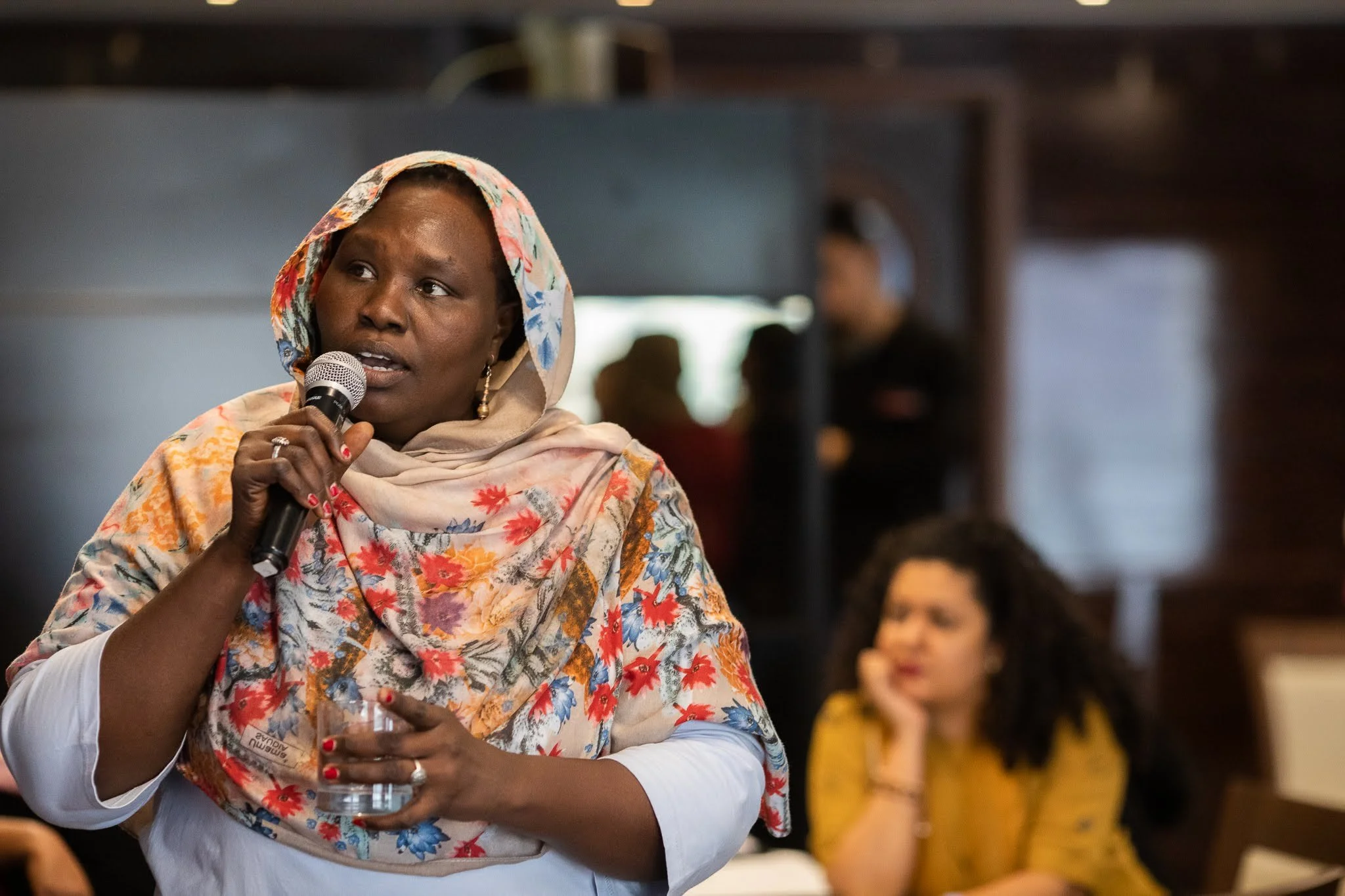
Kamilia Kura
Kamilia leads Nuba Women for Education and Development Association (NuWEDA), based in the south of Sudan. Kamilia worked with Karama on a project that aimed to bring together women's groups and activists from across the country, in order to unify their vision for Sudan's transition.
Through the activities and the program that we did with Karama, we saw the change among the women. The trainings that we had with them, it was not one training, it was really very intensive training. According to the criteria of Karama, we are able to select really relevant women who work with the communities, who have been supporting and doing work with women, and youth work in the communities.
We have really targeted relevant people for that program, for the activities, for the trainings. These ladies, when they went back they were actually very active - even more than before. We trained them in leadership, we trained them on knowing their rights, and we trained them in peace building, we trained them in democracy - how they can lead in a way that lets others see that they are working in a way that respects others, and also including others in the work.
For each of the trainings we carried out, each group had three trainings, and each training had around 40 participants. So you can get an idea as to how many people might have been able to benefit from the work. They have disseminated their own plan that we did with them at the end of the workshop, so it will have reached well beyond the trainings themselves.
Creating Networks that Thrive
They are not just doing the work alone. If they have any activities, they come together, they address this issue together, they get the opinion of the community, or their fellow young leaders or young women who are working with them. I think they have really changed the way they have been working before.
This is what I have been getting constantly from them women from El-Obeid, women from South Kordofan, women from Dalang: we brought women from these different areas, and up to now they are still working together because they have built a very strong network, and even those ladies who who came from the University of Dalang, and the University of El-Obeid, they have created a cooperation, so you have women from Dalang having some activities or having some meetings with the women here in El-Obeid. They are having a different interaction. They're still doing that work. And I think what we have been seeing up to now is that it is really sustaining itself.
They have a network, and they continue to get together. And I'm even involved in this network. They have a group, and I am involved in that. I can follow their interactions. I can follow them continuing the work. And even in this group I'm also present. I can witness, and I can see how the interaction is between them, the women in El-Obeid, the women in al-Fulah, for example, the western part of Kordofan, the women in Dalang, and in South Kordodan, in Kadugli, so I can see how they're interacting.
They're still continuing, and if they are running any programs they include each other. For example, the women in El-Obeid invited one of the women professors who was with us in the training, they wanted her as a trainer. We have been following that. They are still very much connected. This has increased their relationship, and before they did not know each other. It is only through our work that they have been brought together.
Something really important is that they have always been coming back to us. We are saying to them, "we're doing this, we are going to do activities, we are having initiatives. So we want to include you. And we want you to have an opinion." They have created a coaching network, they are training, even when we are not together with them, even when we have finished that program with them, when there is no longer formal face-to-face work, they are always coming back to us to ask us, "We are going to do this. What do you have for us?"
They have really benefited, and they have increased their knowledge, increased their space of working. In addition to that, after we had the eruption of conflict in Sudan —the war in Sudan—there are some ladies who have been kidnapped, some ladies who have been violated by the RSF, the Rapid Support Forces. They have stood up, and they confront what has happened, they talk about this. This is what I was really so happy about, women in these areas who can talk about their rights and those women who can mobilize other people to support them in this issue. So this is what I can say that these people have really benefited from the program, because I can see what they are doing.
Something really important is that they have always been coming back to us.
The Karama project was my first time to work with the women from El-Obeid, for example, from the northern part of Kordofan, and this is actually where I am seeing the change, because that was my first time to get hold of those young ladies. And they were nominated by other women whom I know. When I was looking for young ladies who are very active, according to the criteria Karama shared with us, this is how I got hold of them. And even these ladies from Abyei, that was also my first time to work with them. The Abyei ladies did a lot of work in their area there, even though they had their own troubles, their own problems. But I've been following them. Sometimes I have two, three months without hearing from them, but still we will get in touch with them again after some time. Even in Abyei, they have problems with the internet, and so it's not easy for them to call. them and find them. They can communicate with me. The good thing with these women is that they keep on communicating with me, and they keep on asking for advice from me.
The project was about women's leadership, about enhancing the capacity of women to do their work in their communities. Because they have to address the issues on the ground there. We are not there for them, the media more broadly is not covering the issues there, we cannot know that so-and-so is happening in that state, for example, but because they are on the ground and working with the people, they will know the sorts of challenges, issues, problems that are facing women on the ground. And so that was one of the aims of empowering women and empowering women to work effectively in their own communities. And this is exactly what I have seen. Some of these ladies we trained, we trained about 30 women, and I can say that perhaps 60 or 70 per cent, have been really very active throughout after this training.
Displacement and Resilience
The others I would not blame them and ask 'why are they not active?' because we have a lot of challenges in this country. Even with this war some of them leave the country, they went somewhere else as refugees. I cannot blame them because they are no longer in these areas. But even now I've been talking with one lady, from Western Kordofan, who told me that she wants to go to Kampala. And she has been in this area since the eruption of war, and maybe you have been hearing about the conflicts in Greater Kordofan, West Kordofan and North Kordofan and Nuba Mountain, South Kordofan. So she told me that now these people, ‘they came and they burnt our area. There is a lot of destruction.’ I think she also had close people from her family who have been killed, and some of them are injured very severely, and she told me 'Kamilia, I'm not going to stay long here. I'm going out. I'm going to Kampala, because now I cannot tolerate, I cannot endure what is happening here in our area.'
We really talked about it, and how she can go, and she also requested to see if there is any support, if there are any people who will host her when she goes to Kampala because she has never been to Kampala. These are some of the things also that we sometimes do just as activists who have been human rights defenders, women's rights defenders. I took that on my shoulder, and I linked her with some of the people in Kampala, and she’s there in Kampala now. I think she has been there for three months, and she is okay, even though people are not okay if they must leave the country because of the conflict. Maybe this is the people that we have trained, we have built their capacity, we empowered them, and we really saw what they did. But because of these challenges they leave for their safety somewhere else. But I still have women here in North Kordofan. They are still there. They have not gone out, and they are still continuing their work.
Building Local Movement Leaders
The people we trained actually were not all activists, some of them were teachers, primary school teachers, kindergarten teachers. In the community sometimes when you find that if someone is a kindergarten teacher in a village where people are generally not educated, she will be seen as a leader. But because she did not get any opportunity of having that type of work that we did with her, and that actually she mentioned it even in our report. We have mentioned it, that some women have really said that this is their first time to attend such training, a very intensive training, and the first time even for them to get out of the area, to go to other areas. We have brought them to Nuba Mountain, to Kadugli.
They were so happy, even just the change of environment. It was really also something that they have reflected on. But before the training they were not involved in what they are doing now. They were just doing their work, earning their living as teachers, kindergarten teachers, and things like that. But now, when we trained them, and because we had a plan with them that each group worked on with us, they are going to do more trainings for the people there, for the women, for the youth — they even did not just include only women, they include even youth, young people, with them in the activity.
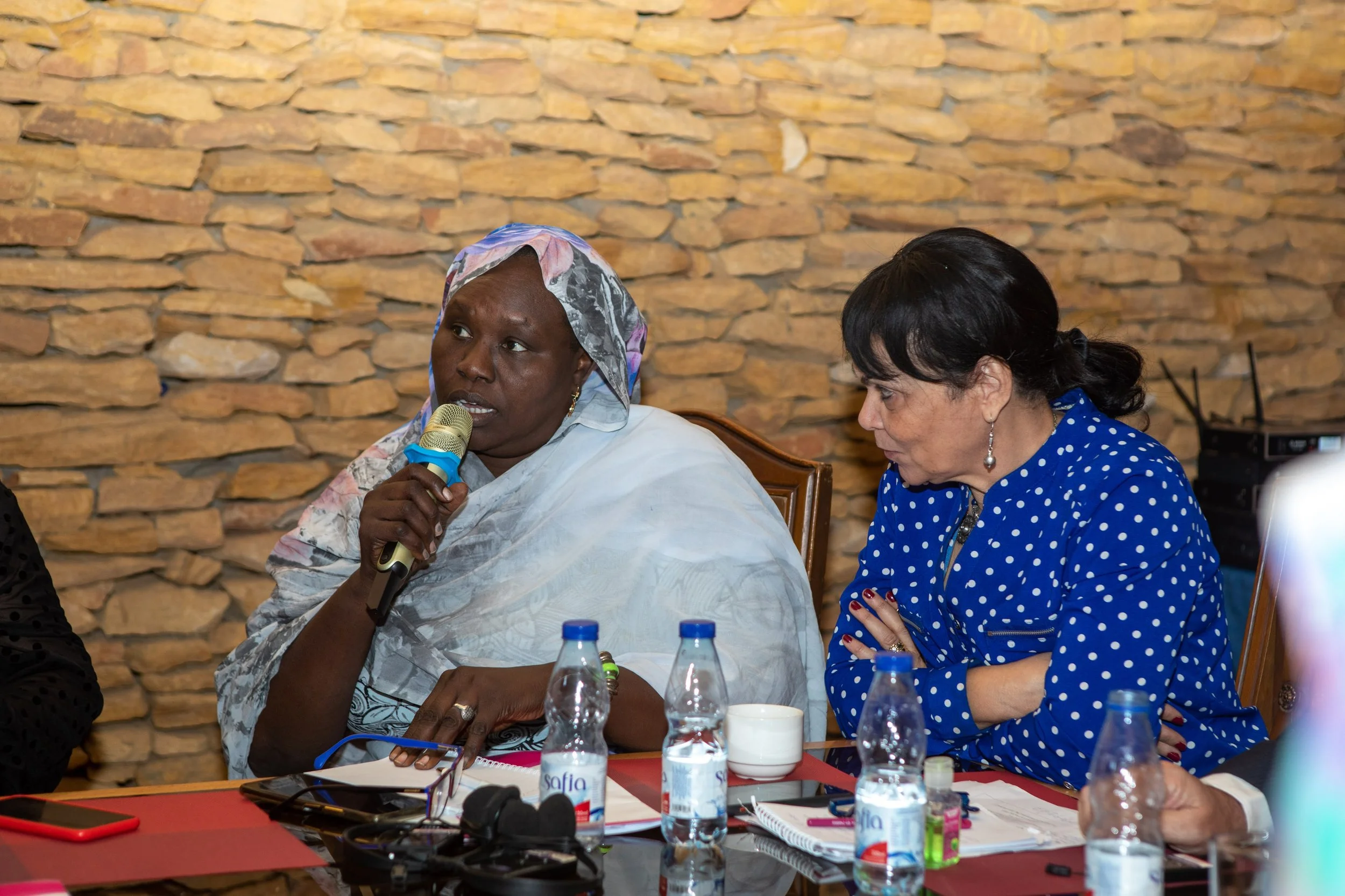
“I told her, you have to be very courageous. You are talking about your rights, and this is exactly what will really help you to talk about other people's rights. If you didn't claim your own rights, how can you talk about other people's rights?”
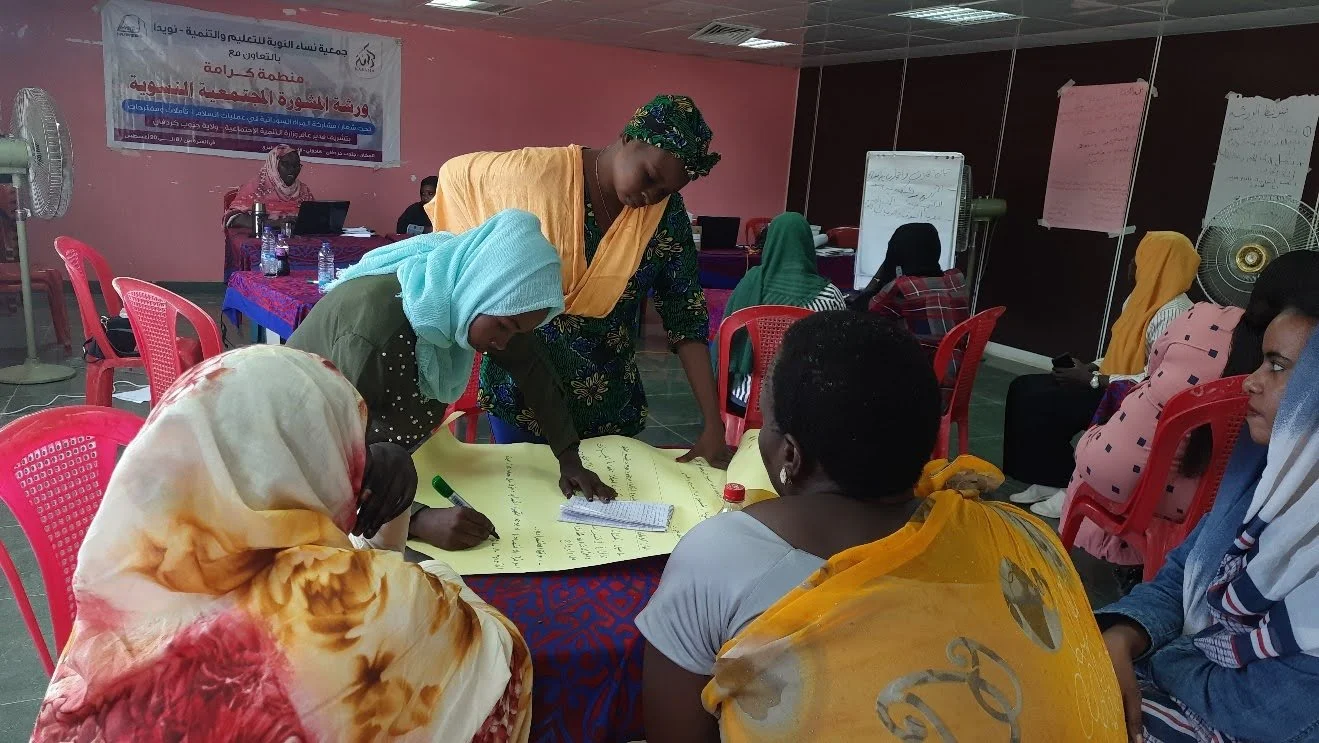
A National Network
There was an activity of national representatives coming to Khartoum, to meet other groups of women who had participated in local trainings, to come together and build a national network.
The national meeting we had in Khartoum was really also one of the most successful trainings. They developed a very comprehensive plan for them to implement it as a national plan. And also they have a plan of what they're going to do in their own regions.
One of the good things that came out was increased space for these women. For example, connecting with the Embassy of Spain, who participated in the meeting. Because I was responsible for this part of Sudan, I was really following up what they have been doing in other parts of the country. Before the training, they had no relationship with the embassies or with international organizations based on Khartoum.
Since then, they have been attending meetings with Plan Sudan, UNICEF, and they told me that they have been given an invitation by CARE to come and attend some meetings with them. They have increased their network and increased their capacity. Before, they did not know about these organizations.
A Story of Change: Claiming the Right to Her Own Salary
This is also the difference, and one thing I could recall very well. The issue of rights, one lady was saying that ‘I am a teacher, but because of the culture I don't get my salary. It's my brother or my father who goes to receive my salary.’ And when they know their rights - that they are working, and it is their rights, they can just get their salary. They convince their fathers, their parents, that it is their right, and even the teachers they should know it is their rights. It is not the father or the brother who works, she is the one who is doing the work, and therefore she should claim that money.
The young woman told me that when we went there the first month, her brother came and collected her salary. The second month her father came and collected the money, and she started talking to the headmaster of the school. She went to the headmaster because she cannot confront the father. So the headmaster said, 'Okay, I will talk to your father. Then you just take your money, and then when you go back home, he can ask you, because you are his daughter, and you will not refuse to give him if he needs some money, because he's in need. You will not refuse' and she said, 'yes, I will not refuse, but if I can't do something for myself, then why am I working?'
And that is their first time to open up and speak like that. And even when she spoke with the headmaster she called me, and she said, 'Kamilia, I really did something today. I don't know whether my parents will chase me away from home. I don't know whether they will come and ask the school to dismiss me, I don't really know, but I took the courage to speak to them, to the school master.'
I said you did. You did something very good. You have to be very courageous. You are not doing something wrong. You are talking about your rights, and this is exactly what will really help you to talk about other people's rights. If you didn't claim your own rights, how can you talk about other people's rights?
Since that time, after she came from the training, I think before it was 4 times, the brother and the father had collected the money. From that time she started receiving her own money. And she continues to receive her own money. This is something that is very clear to me. The change that happened.
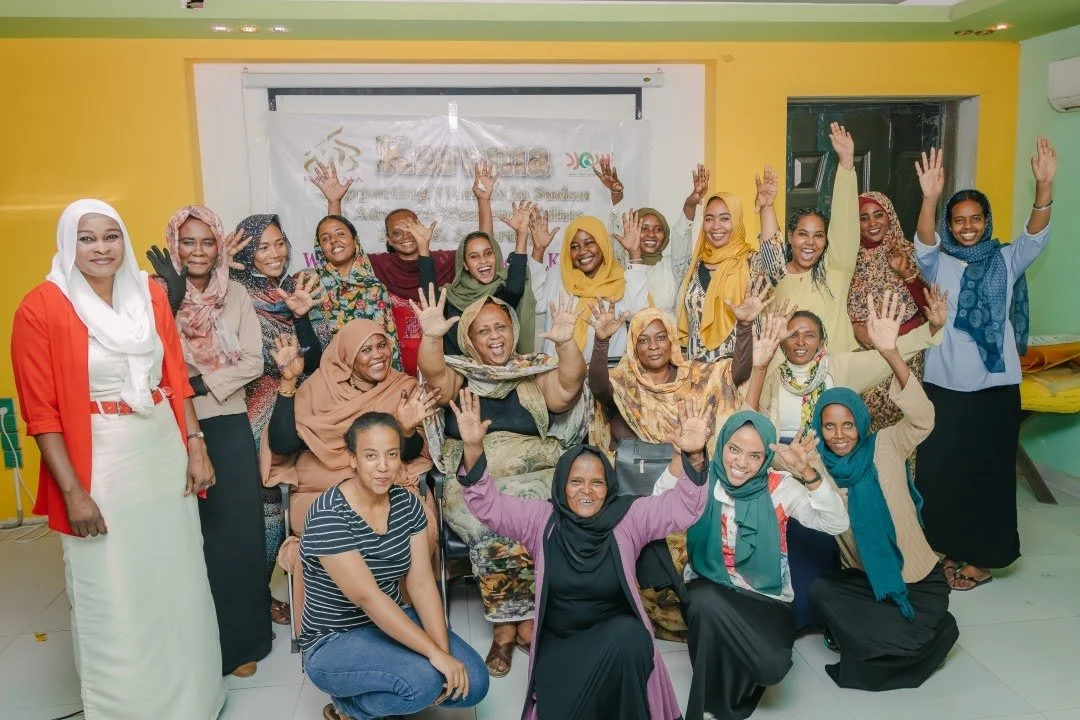
Connecting to Karama’s Regional Network
There are also the meetings that we had in Egypt. It was really one of the best opportunities for networking with other women from across the Arab world, and I really benefited from their experiences, sharing their challenges and their experiences.
They were having similar challenges or some things that are in common. And that gives me the courage, and the sense that it is not only Sudan that is facing these kinds of troubles, but other countries also, and other women also are facing the same challenges. And the good thing is that many women in their own different regions are also putting a lot of effort to see that they contributed to the change they need in their communities. It has really opened my space, and also introduced me to different women in different regions, who I still continue interacting with, and talking to them in our group.
That is really good for me. That is really fantastic.
Expanding Into Hard-to-Reach Communities
One of the success stories is increasing the profile and participation of women in different localities. Reaching rural areas, reaching some areas where we have never reached before. I think this is one of the successful things I can say because we have reached these women in the rural areas, and we have been able to build their capacity and create good relationships with them. And now they are doing their own work. This has shown me that it is really important for us to have women everywhere who have the capacity, who have the education, the knowledge on how to do things on their own in their own context.
We can train them according to our own understanding, but when they go back to interpret the knowledge that they gained from this work, they do it according to their own context, their own culture, their own norms. This is really one of the good things, it is a real success that we have reached out to different contexts or to different areas, and especially the rural areas. Karama has really brought this criteria that makes us go inside where we have not been thinking about, to bring some women in those areas where they can again play their own role.
I am just talking about the experience of what I did with these ladies. I had never worked in Abyei except with the program with Karama, and this is an area that is subject to diplomatic conflict, it has a special administrative status between Sudan and South Sudan, it is between the two countries. The people in Abyei will not go to South Sudan and ask, 'You people come and help us.' They are calling their own sisters within Sudan, to train them and support them. And even if there is any conflict happening there, we are the first people to know that there is conflict that is happening there, to take up advocacy and calling of the government. Reaching out, helping Karama, helping us, reaching those areas to me is excellent.
Inclusive Activism
Making activism more inclusive has really helped me to shape my thinking and my plans. I was just within a limited area where I do my activities - in Nuba Mountain and Khartoum area. But I started there thinking widely, thinking broadly. Even now we have an office in Kassala, we had never worked there before. We have an office in Port Sudan, this eastern part we have never thought of, but with those ideas of widening and reaching other areas where we did not go, I think that has really also helped us to be like that, and to think widely and broadly where we have never reached. Even though Sudan is big — we cannot reach everywhere — but also we select the areas we assume that are still isolated, and women are really not having a chance or not having opportunity, especially like these areas that we have selected. Now that we have the office in Kassala and eastern part of Sudan, generally the women there need a lot of work. They need a lot of work.