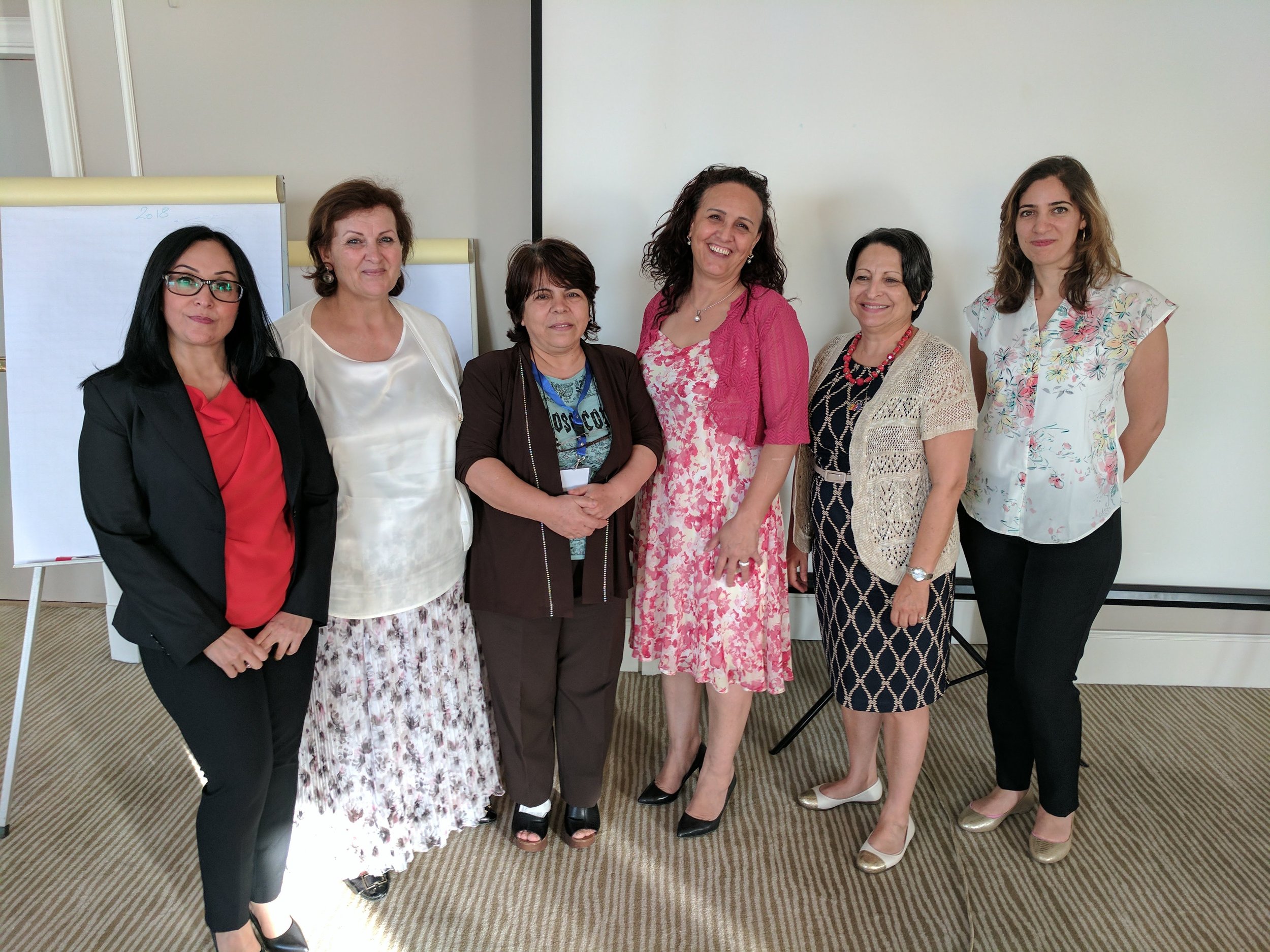
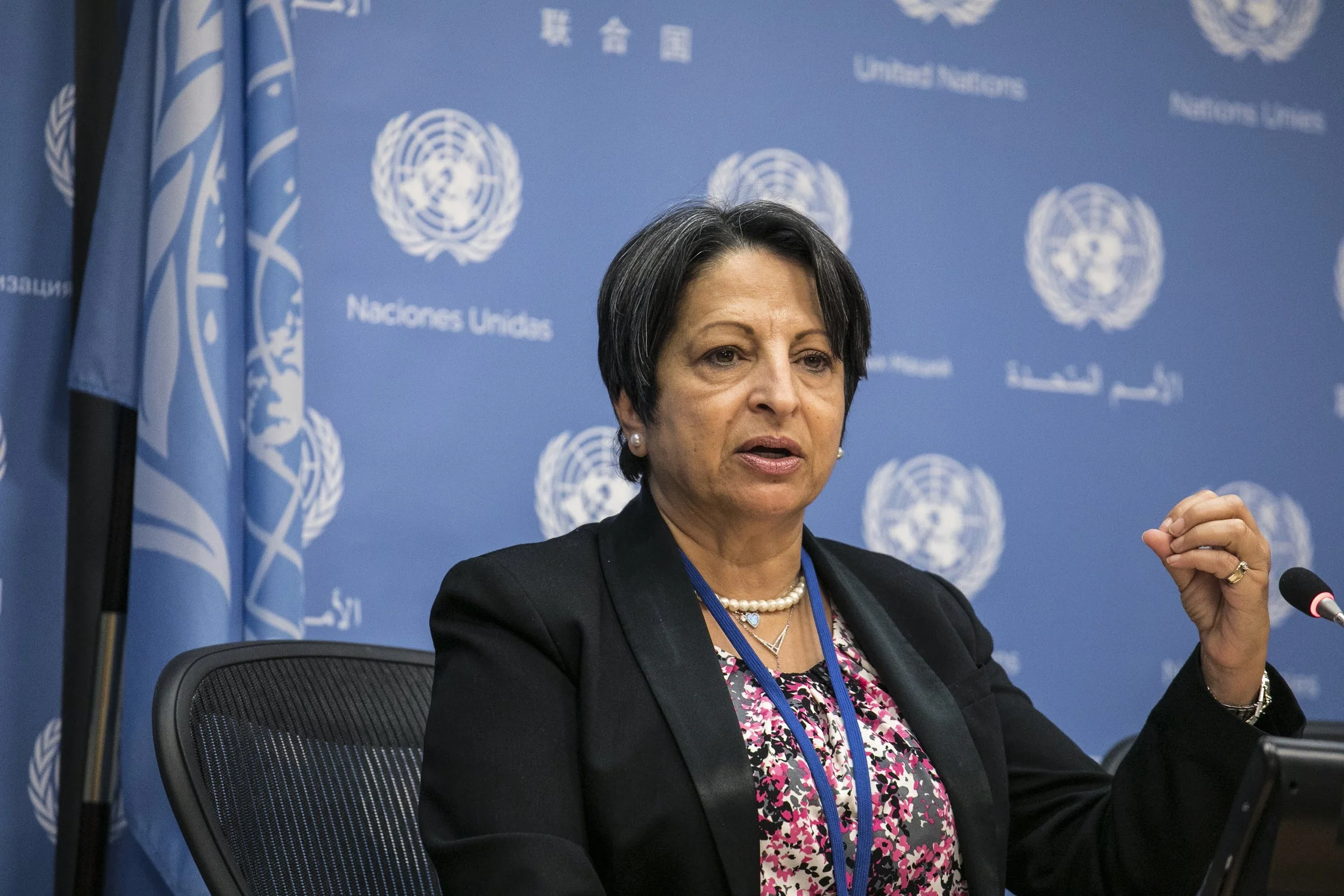
Dr Lily Feidy
I come from Jerusalem.
I live in Jerusalem.
I was born in Jerusalem.
I started working with Karama when I was appointed as the CEO of MIFTAH, which is a Palestinian non-governmental organization focused on the empowerment of women and youth in Palestine, and on issues like political dialogue with international representatives in Palestine.
Building Regional Solidarity
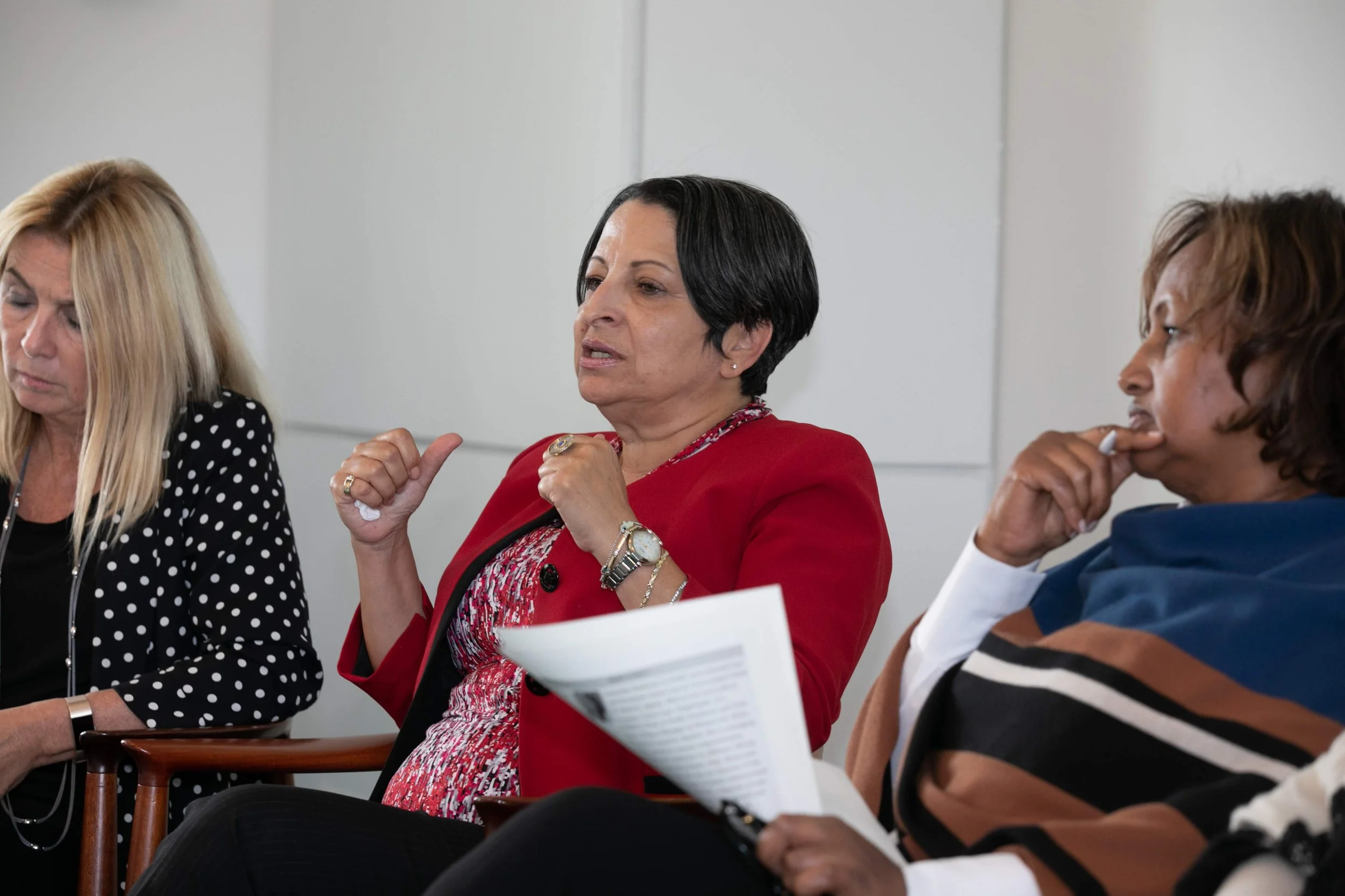
When we were introduced to the regional network of Karama 20 years ago, it made a real difference. We met activist women who were from countries that were suffering then - Syria, Libya, Somalia, Yemen, Palestine. These countries were going through real suffering, while we were in Palestine and Iraq were the only countries in this network that were under occupation, and Palestine still is under occupation.
Working together, hearing the stories of these countries, telling our stories, was an empowering experience. It empowered us to seek and to discuss and to brainstorm about what could and should we do as women in the Arab region.
The second thing that was very important in joining Karama was the participation not only regionally, but also internationally. This has been especially the case with participating at the Commission on the Status of Women. Organizsing delegations to New York every year, finding ways to influence member state delegations, the missions, the UN itself, to inform them of our needs, of our struggle, and the support that is needed in this part of the world. We have been able to tell decision makers what it will take for women to empower themselves, for youth to be empowered.
We have been able to try our best to document the stories and the struggle of women; of women who were targeted, either domestically or by occupying powers. We heard from Iraqi women who would tell their stories, women who had to leave their country in order to survive. We heard the stories also of the Libyan women who were very active during the revolution, but then, after the revolution ceased, how the fanatic militias targeted activist women - like the example of Salwa, who was murdered because she was running for election.
I give Karama the credit for making us part of a regional network of women, and at the same time an international network of women. I think most of the women who are working with Karama give credit for what it did for us. We still need to work more on empowering ourselves in our own communities, because the obstacles are not only from occupying powers, for example. It is also domestic. We need to be in the decision-making positions.
Women are needed here because the perspective of women in dealing with peace negotiations and such processes, are different than when it is men who sit aton the table and discuss the agenda. Especially when women and children pay the price, the heavy price, in all war zones in the world.
Karama's connections to international organizations, and Karama's connections in the Arab world have made a difference for all of us.
It also helped build up coalitions between different organizations in the Arab world and also with women organizations internationally. It is a feeling of empowerment that we have when we meet together as women from countries in the Arab region, and when we meet with women from the international community. It gives us hope that we will continue, that they will support our struggle, and we will continue our work locally, so that we can advance the position of women in all levels of power.
These are women who are working to make a difference. We are talking about changing legislation in favor of women, especially when we're talking about women joining peace talks, about elections to Parliament. We want more women. We need affirmative action, we need a quota, for ensuring the participation of women.
With the help of Karama, we were able to help women who wanted to run for municipal elections. We trained them through a project supported by Karama, a wider project with international partners, to train women how to approach and how to talk to the public. It trained them how to present their plans in campaigning.
After this work, we had a few women who did very well, and who were heading municipal elections. But for a long period of time, since 2006, the political situation meant we did not have Palestinian legislative council elections.
We’re hoping now that once the ceasefire is finally achieved, that we will have presidential and parliamentary elections.
This is where we stand now, and of course, it's not only true in Palestine that women need more support and empowerment, but also it is in a lot of countries in the region. Women still are underprivileged, and not represented as should be, when women form 50% of the population in our communities and every country.
Karama has been able to support work to ensure women participate in negotiations, participate in elections, and also in trying to change legislation for women. There have been so many laws that give effect to discrimination against women. Laws concerning divorced women, single mothers who are raising their children, because either the husband is imprisoned or is martyred, or if he divorced his wife and could not provide for the children and the wife after the divorce. It's tough to change legislation, but it was important to create a referral system in a special institution where women can go and complain about these issues.
It has been very tough because there are reactionary forces that do not want women to have more freedom.
Building the UNSCR 1325 Coalition
The work that Karama has done on UN Security Council Resolution 1325 has been particularly important.
We had been invited by Karama to at least two or three meetings in Egypt at the League of Arab States. We talked and focused on the struggle of women in Syria–especially women who were refugees from Syria, living in Egypt–and how much support they needed, in order to work and in order to enroll their children in schools, basic support.
Through Karama, we were then able to work on a report between four women-led Palestinian organizations. By bringing the four of us together, it gave more power to be implemented. It's always better to have a coalition of institutions working together than to have each NGO work on one issue. It was out of this project that we started thinking of forming the coalition of women working on UNSCR 1325. And of course, this is how we were also able to bring in the Ministry of Women's Affairs.
This report is a milestone in the work of Palestinian organizations, especially women’s organizations. The work on UNSCR 1325 helped us to form a huge network of Palestinian NGOs, who cooperated with the Ministry of Women's Affairs in Palestine.
This was not only something important for us working in NGOs, the Ministry also needed support from civil society. The network now is huge, there are more than 50 NGOs that work together on these issues. And, this was a milestone in the work with Karama. We need more of these types of working together.
We tried to push our agenda by discussing 1325, and what we can do in order to help the Ministry as civil society organizations. How we could help the Ministry, how we could present our demands, ask for the changes in favor of women, and how to present our case of course locally, but also regionally, and internationally.
It has also been so important that Karama has focused on working with the youth. They are the future generation who will lead the work in Palestine. They are very smart young women, and we need to encourage them more, because they're a different generation than the older generation, and they are exposed more to what's happening in the world.
It would be very beneficial if we replicate the previous work of Karama with the different Palestinian organizations. What is so important in this work is to not only do a project only for one phase, but I think the continuity of the project will give it more push. Continuity is always important for stability.
Women, peace and security has been so important, but now it is vital to keep working and try to influence the United Nations to reactivate this agenda. It is especially important to put effort into the part on documentation, and also the pillar that talks about protection and security for women.
Documentation is very important because as Palestinians in Jerusalem and the West Bank, we're subjected everyday to harassment on all checkpoints, which are increasing every day. As well there are women held under what they call ‘administrative detention’. This is something that was created under the British Mandate. It means there need be no charge or evidence against detainees legally, there is no due process, they are not taken to court, but the occupation forces can renew their imprisonment every six months. It is still used widely and against women.
Our struggle as Palestinians is not only local or regional, we need the support of the international community.
I remember last March, when we were at the CSW, there were demands made to the head of UN Women, who is from the Arab region, that we need to move CSW from New York headquarters to the South. We need more South-to-South focus. In New York, we feel that there is a lot of pressure on the UN and its institutions not to reactivate what is really the core of 1325, nor what is there in CEDAW.
These are the two important international agreements that political, traditional leadership in the Arab countries, and especially in Palestine, are working against. They don't want any empowerment for women because they believe that it's against the Sharia, or religion. And of course, this is just an excuse to scare women. It is not a substantive criticism, it is only to intimidate women, but we're not intimidated nor scared, and we keep pushing for more, equal opportunities for women in our countries.
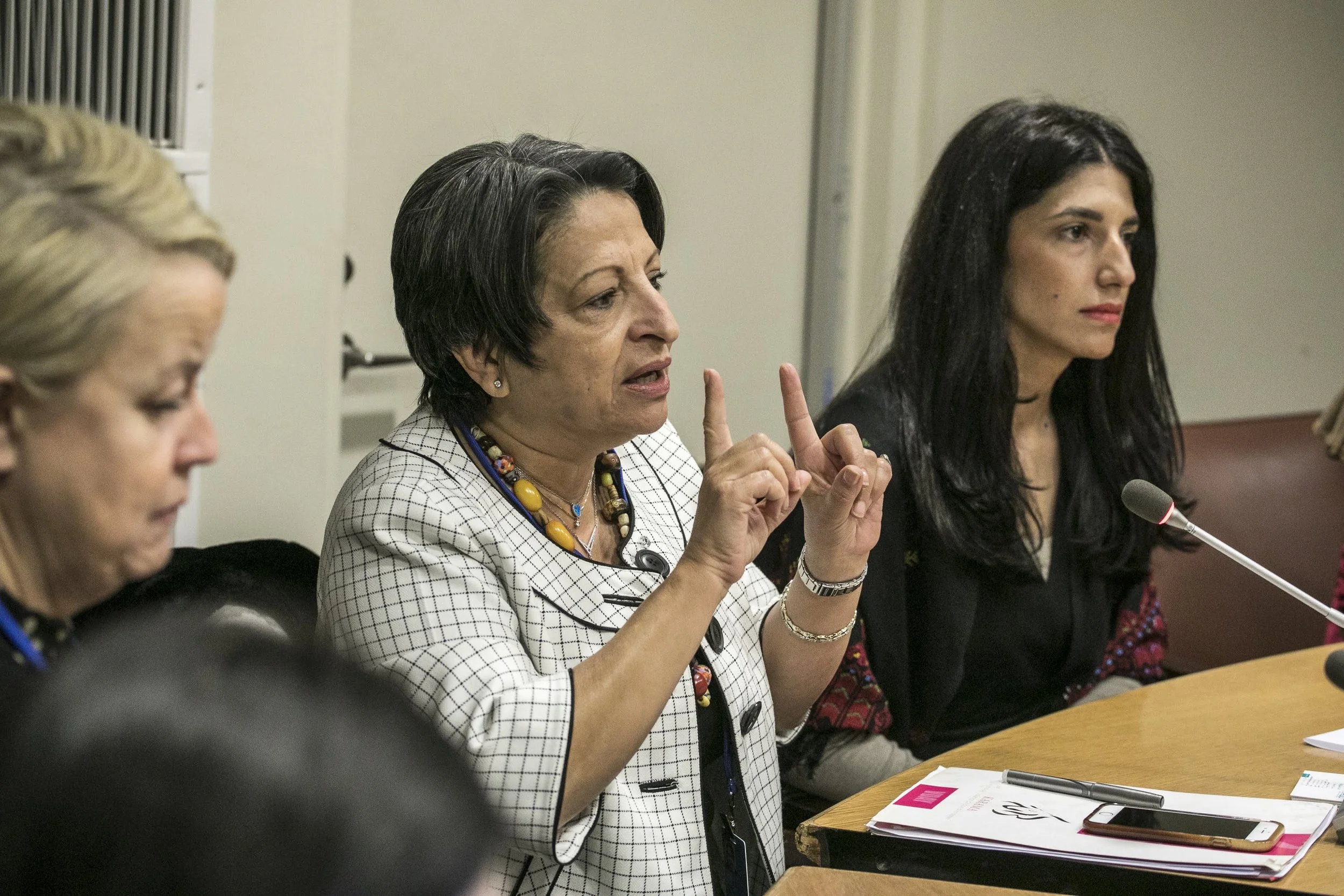
Working together, hearing the stories of these countries, telling our stories, was an empowering experience. It empowered us to seek and to discuss and to brainstorm about what could and should we do as women in the Arab region.
Priorities for the Next Phase
It's very important now, after 20 years of Karama's activism, to try to push forward, for Palestine in particular. How to empower women for at least a few more years to help us achieve what we want, via more capacity building, advocacy, and financial support. We need to engage women more in political activism, especially that we might have elections next year, and it is very important because according to the Palestinian Basic Law, the quota says that women can have 30 per cent representation both in the national elections and also in the municipal elections. This is very, very important.
It is notable that in the first elections that took place in Palestine when the PLO came in, one woman ran for presidency against the late Yasser Arafat. This candidate was also an activist, Samiha Khalil.
We need to push for all these things, based on 1325, on CEDAW, UN resolutions that are in favor of Palestine and Palestinians. And women usually make a difference when they win. They work very hard, they show commitment and achieve a lot when they are in positions that influence their communities.
Needless to say, at this time it's very important also for us all to support women, either strategically or by helping them raise funds, by networking to help those in Gaza. It needs a lot of work, and all Palestinian institutions, civil NGOs, non-governmental institutions, are trying to put their forces together in order to help Gaza in different things, in education, in health, rehabilitation. They need help in every aspect.
And I hope that for Karama's 20th anniversary we, as Karama, put this as an important point of focus in our future programs.
Palestinian women have contributed so much to the work of Karama. I think the most important thing that Palestinian women represent is what the West calls resilience, but we call sumud (صمود), or steadfastness.
Palestinian women are very powerful. They know what they want. They support their community and their families. But they need a wider net of international support, especially in international forums, whether in Europe or the United States or otherwise. It is very important to highlight how women endured two years in Gaza, two years of destruction, two years of starvation, two years of genocide, and still were able to protect themselves and their families. How the women struggled to keep our cause alive, especially in Gaza, but also in the West Bank.
Hope in International Solidarity
We feel we need more support from the West, which was basically, historically, very supportive of Israel. Countries like France, countries like the UK, countries like Spain. Here I remember what happened in South Africa during the apartheid, regime. How the world imposed sanctions on South Africa, and how the world was very supportive of the struggle of Black South Africans.
This was crucial in defeating apartheid and in liberating Black South Africans who were the majority. There are of course many differences between South Africa under apartheid and Palestine under occupation, but what we need is that international solidarity that was important in ending apartheid in South Africa. We need countries to be more vocal. We have to amplify the struggle of Palestinian women. We have to advocate. Advocacy is very important, especially as Karama is very well connected internationally and regionally, in the Arab world, in Europe, and in the United States - especially in terms of the United Nations based in the US.
What makes me hopeful is seeing so many people go out in Western countries, in Europe, those who go out in demonstrations that supported the Palestinian struggle and supported Gaza. It became so visible.
There are so many things that states can do, but most important is to support sanctions on Israel.
I just want to say that I appreciate the work of Karama a lot. And I appreciate the work of Hibaaq, and the people who work around her.
It's an opportune time now to expand the work of Karama, when it comes to Palestine. As a Palestinian and a Jerusalemite, and somebody who's been watching what's happening in Gaza, and, how much help they need, long-term, and what's happening in the West Bank, I hope that we empower more women NGOs in Palestine, we can do a lot of work. And, I truly, truly think that Karama’s approach can be instrumental and be a catalyst in joining forces around the world, to support our work, to at least recover part of what is lost and has been lost during these two years. The problem did not start on October 7th 2023. The problem started a long time ago, since 1948. Most of the world has now recognized the state of Palestine, so it should be easier, but I truly think that Karama can offer a lot, and my appreciation to Karama is beyond what words can express.
In Karama, I really care about all women in the Arab region, but this is a crucial time in our history where we need to focus on ourselves as Palestinians. And I thank you all for the good work that Karama is doing.