
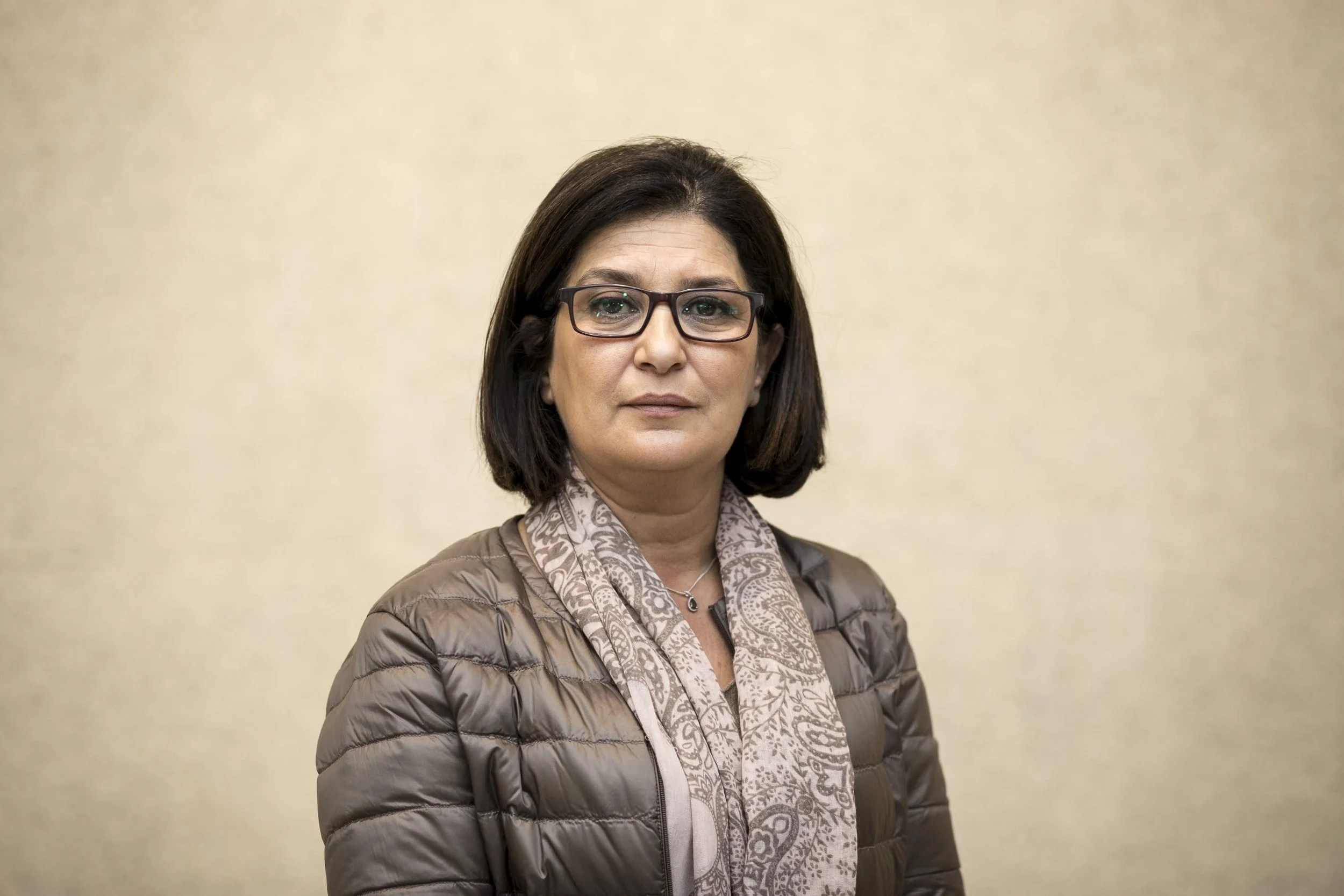
Rhizlaine Benachir
As a founder of Jossour Forum des Femmes Marocaines, Rhizlaine has led advocacy to address discrimination against women and girls in Moroccan family law.
I am a feminist, activist, and the founder and former president of the Jossour Forum des Femmes Marocaines (Jossour FFM).
Jossour FFM is an association we created in 1995, and we campaign for women's rights at all levels, for the equality of women at the civil, political, cultural, economic, social, etc. level. We also work at the international level, being ECOSOC registered, which allows us to participate at the United Nations in New York and at the Human Rights Council in Geneva.
Our activities are on the one hand advocacy and on the other hand in the community, supporting the economic empowerment of women in the cause of ending violence against women. We work a lot with young people, we have associative partners at the national level of local associations of young girls and boys.
We have carried out many projects with Karama, with young people on violence against women in Beni Mellal, and also in Agadir, and we continue to work nationally with Karama. We are working on child marriage, because it's a problem on the ground, it's a phenomenon that is very widespread here, with a lack of education. Young girls are married very early, at the age of 11 or 12. There is a very high rate of poverty and illiteracy in these regions. That's why, with Karama, we targeted this region.
Jossour FFM became partners with Karama in 2014, thanks to my friend, the lawyer Saadia Wadah. Saadia told me about Karama, and she spoke with Hibaaq to introduce me and my activism. Hibaaq said to me that any activist, and any committed woman is welcome to become part of Karama.
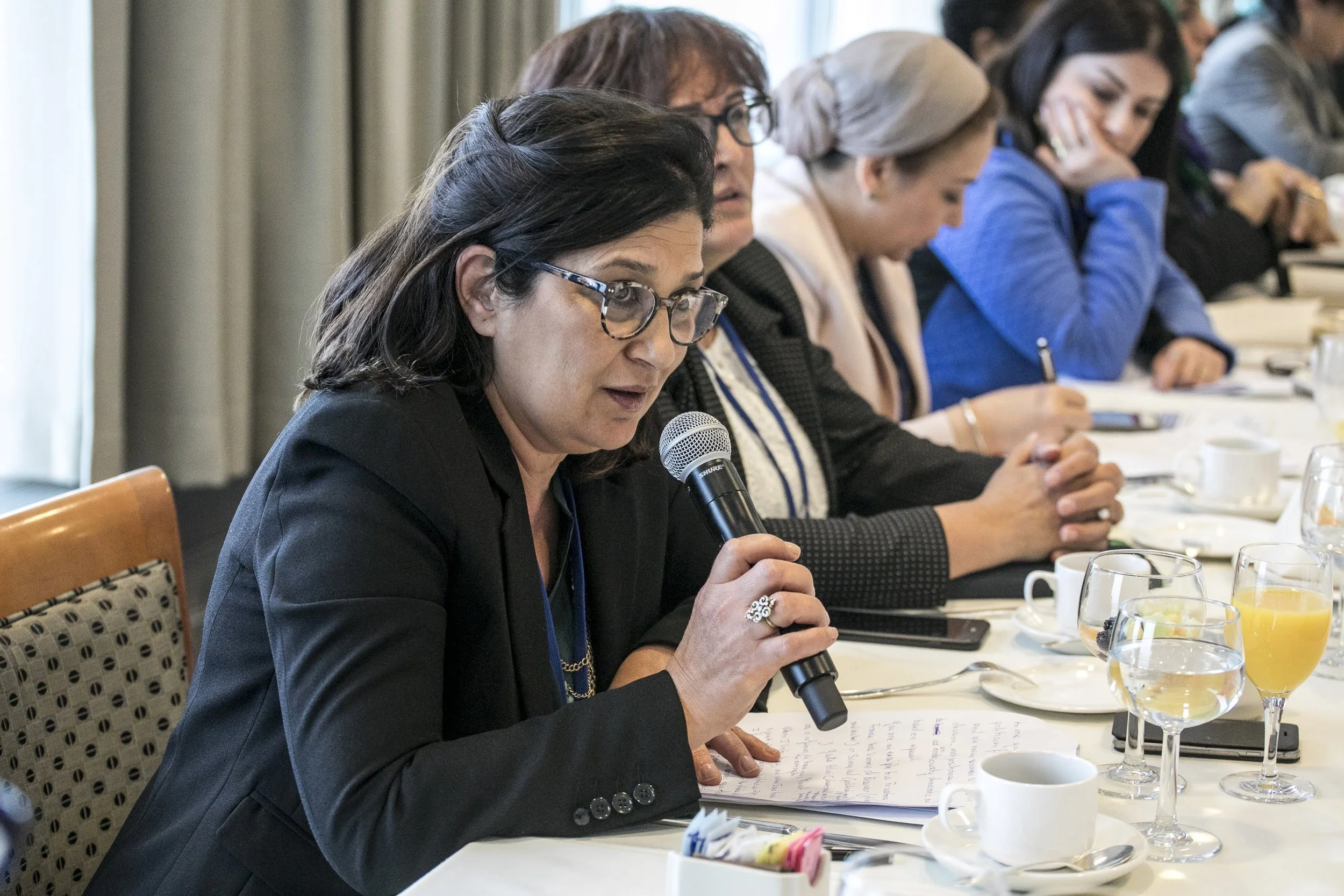
Becoming part of the network
When I joined, the first thing that I noticed was Hibaaq, her persona. She is a woman leader and a real woman. She is a woman who has an objective, and a very clear vision of Karama and what she wants to do through the network. Rather than impose her own ideas, she unites us as members, and she brings us all towards the same objective that we share while ensuring that there is space for us to adopt our own strategies.
That is the quality of a true leader, she does not impose anything, she does not decide anything for us, we decide together and we go towards the same objective together.
That is an asset that even today I have not found in other networks. There is also the fact that, quite apart from its leader, it is also such great value in the quality of the members.
For me, it was very new. I'm a French speaker, I'm not an English speaker and I worked very little with English-speaking countries or even other Arabic-speaking countries. It is there, through Karama, I discovered a whole panoply of women activists, sincere politicians who have only one goal, that of dignity, it includes equality between men and women, to develop their own countries, to bring peace to their countries, and to allow these women to contribute to this peace and to contribute to the development of their country and to contribute to the equality of their country to save their country.
That's the first point
Regional power and international advocacy
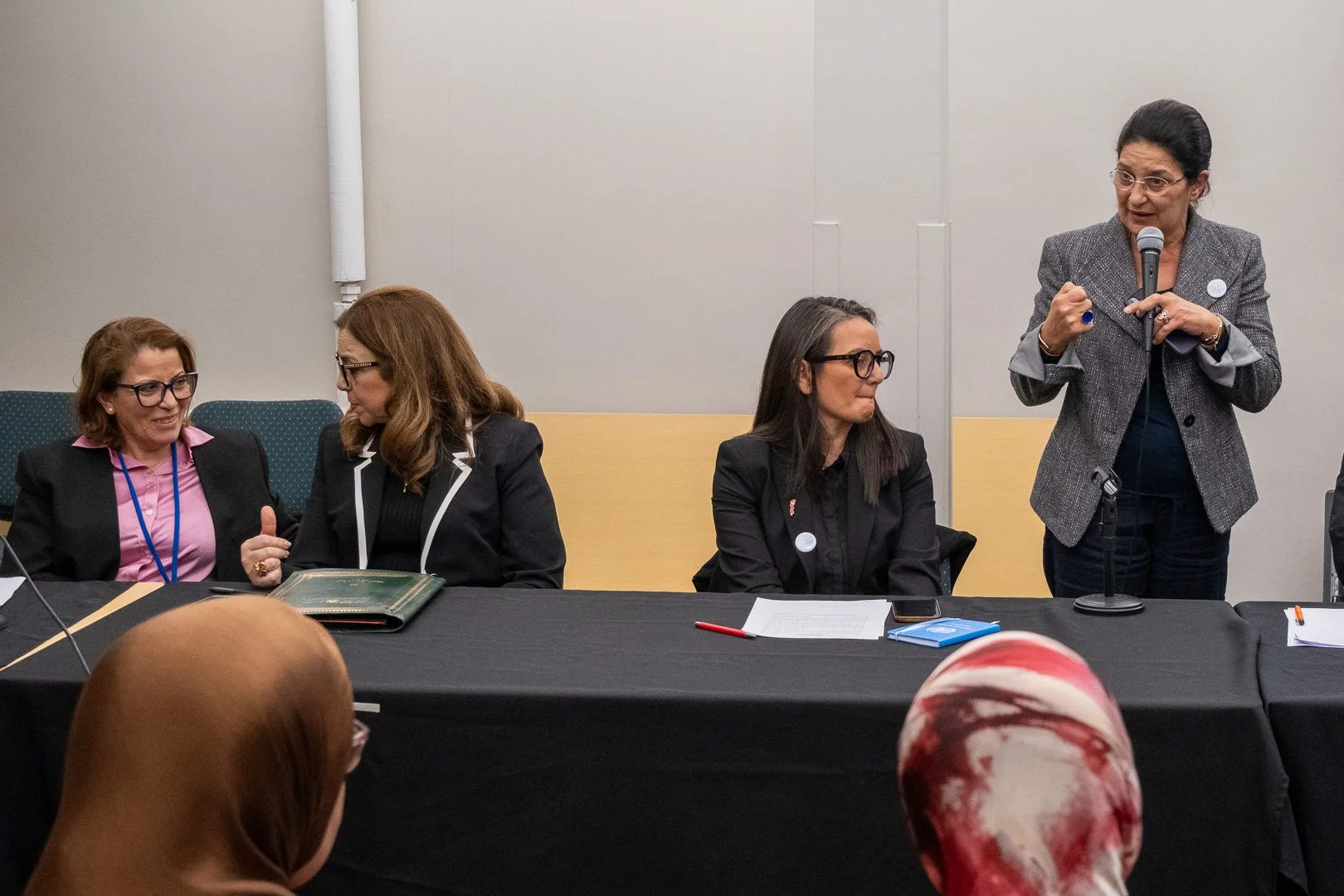
The second point is that this wealth and these women from different backgrounds: Iraqis, Egyptians, Palestinians, Moroccans, Tunisians, Lebanese, Somalis, Sudanese, etc, this is a vast array of people and perspectives. You might well think that all these people are not going to get along, they are not going to coexist. On the contrary, we are a family, and that for me is the true and real impact of Karama and the real wealth of Karama.
That it is a family is thanks to its leader, thanks to Hibaaq. Since 2014, so 11 years that I've been in the network, Karama has trained me, it has taught me a lot of things, particularly about the international aspect of activism. It is through Karama that I have learned about international conventions, the role of the UN, Security Council Resolution 1325. All of these things were new for me, so being part of Karama strengthened my skills in this area.
Our participation each year in the different international activities is very important. It is a richness because, through our participation, we meet everyone. It's wonderful because we don't simply meet them to discuss, we meet them because we know their problems, we know their difficulties, we also know their strength, we compare ourselves to them, and we see ourselves, how we are and the common countries, and, suddenly, the situation of women across different countries.
For us it is also about an exchange of good practices. We draw on their experience, their situation, and so do they in return, they draw on our experience and our situation.
Achieving change
Reflecting on the last 20 years, the decisive turning point for the Moroccan feminist movement was the constitution of 2011.That was very important, because it was at the time of the ‘Arab Spring’ in Morocco. We almost saw such instability, but there was still a very intelligent reaction from the Moroccan institutions to change the constitution.
That calmed things down and met the expectations of a large majority of Moroccan civil and political society. We were engaged at that time with the particularity of Morocco and the Moroccan feminist movement. As soon as it is an issue that concerns the rights of women, the feminist movement in Morocco immediately coordinates, especially with the associations with which we have been working for more than 20 years. We formed such a coordination group at the time on the eve of the 2011 Constitution. Together, we made a very important plea that in fact had an impact on the Constitution, and when the 2011 Constitution came out, we considered it, we were very happy.
We considered that the Constitution responded to, I would say, 80 per cent of our demands. Something that was a real surprise for us, and of course, we were very happy. But of course, the fight continued because now it is about the application of this Constitution, the harmonization of this Constitution with Moroccan laws. This corpus of law is outdated.
The second important turning point I would highlight is in 2004 and the first reform of the Family Code. We have continued to campaign until today for the improvement of this law, especially after 2011, to harmonize it with the constitution.
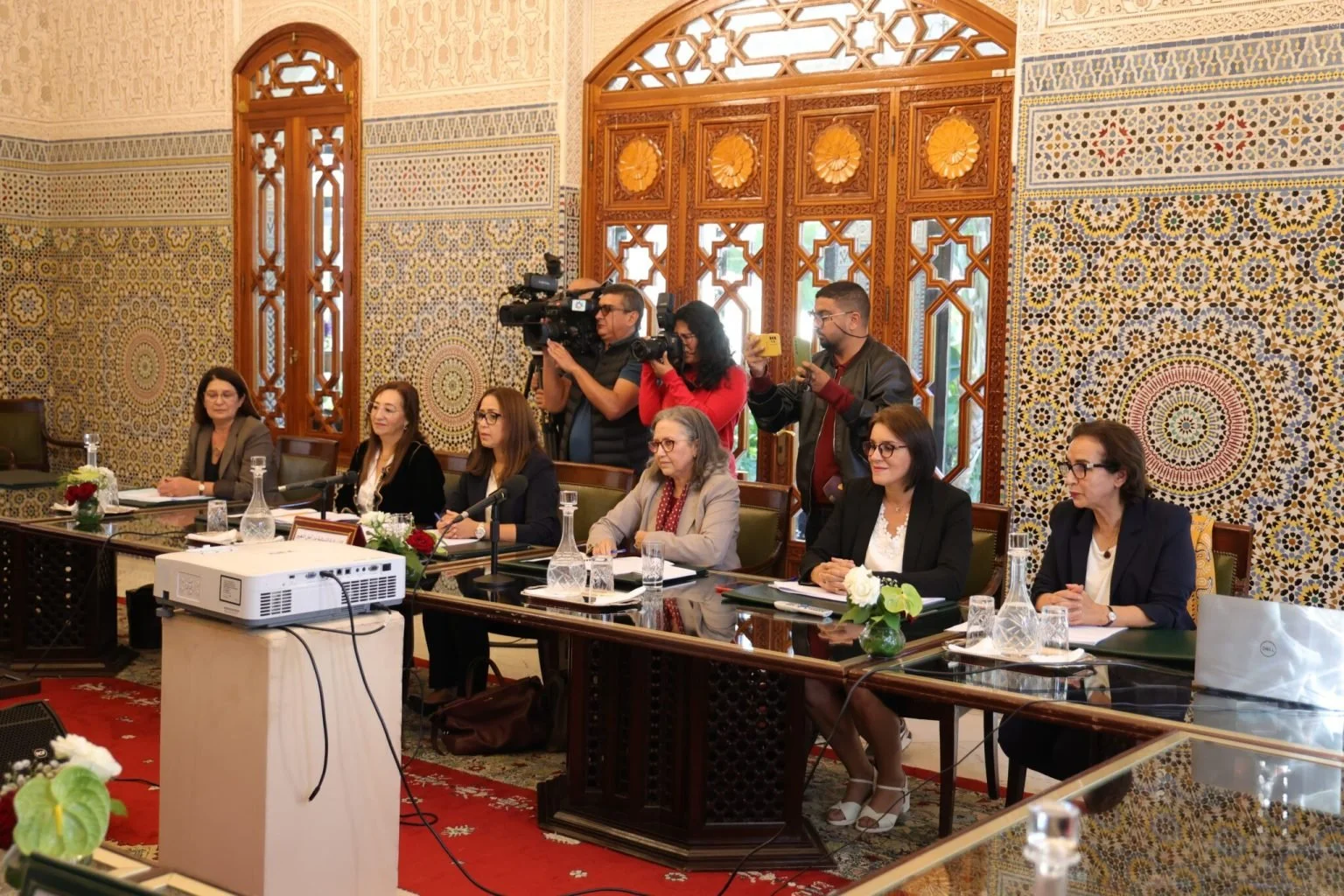
The King of Morocco recently decided to ask the Moroccan government to proceed with the reform of the Family Code. Once again, we formed a feminist coordination for the overhaul of the law with the same associations with which we are used to working, we have demands. Finally, we presented our demands to the Commission, which was in charge of carrying out the project of reforming the family law, and we hope that we will be fully satisfied. We are waiting for the results today. This project must be submitted to Parliament, and we hope that we will be as surprised and happy as the day after the 2011 Constitution.