
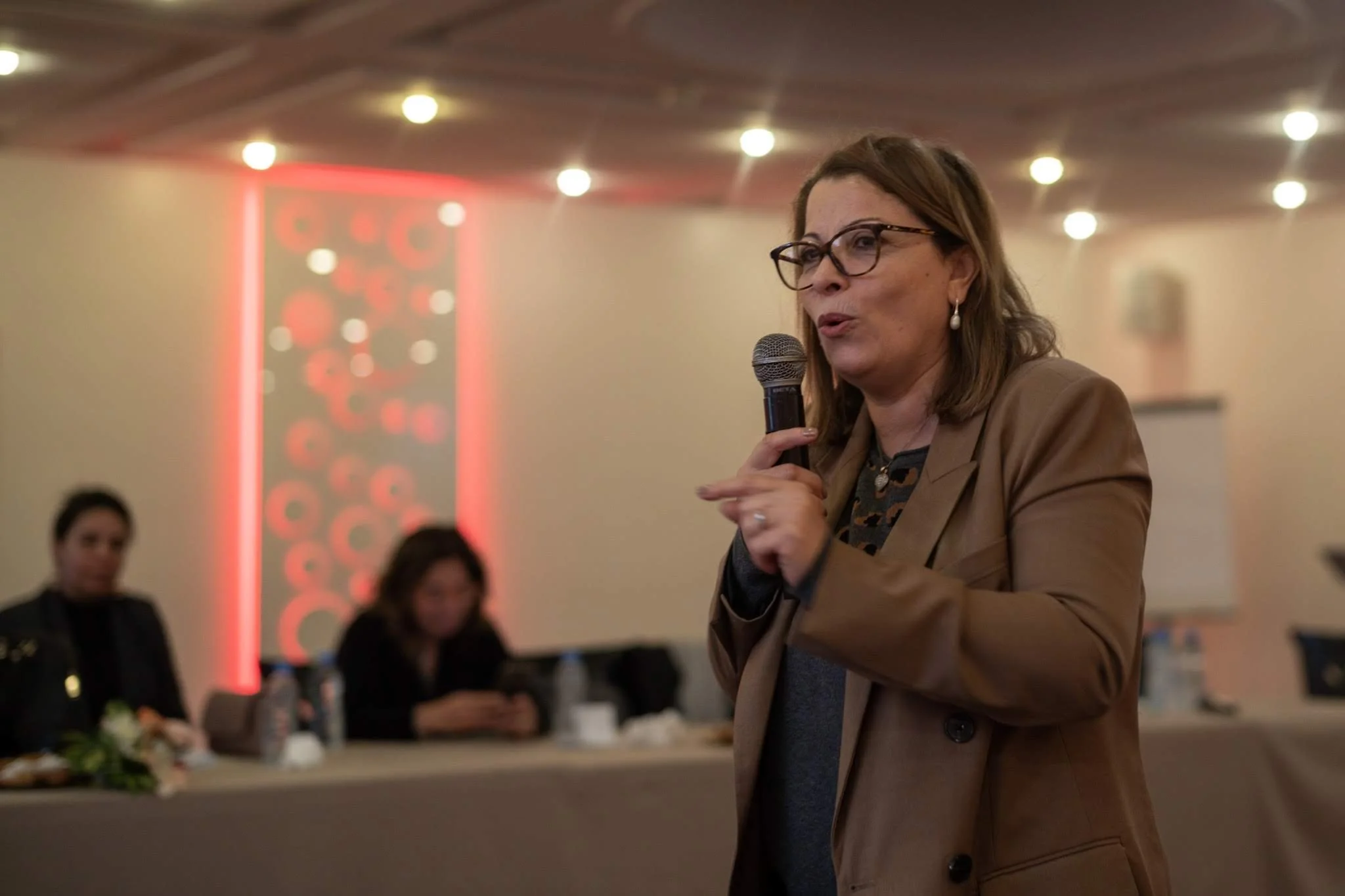
Saadia Wadah
In her work as a lawyer and an activist, Saadia has worked to put human rights and women’s rights at the center of the law and legislation.
I am a member of the Association Marocaine de Lutte contre la Violence à l'égard des Femmes (AMVEF, the Moroccan Association for Combating Violence against Women), and a human rights activist.
I first learned about Karama when it was founded, and in fact the first meeting took place in Morocco. It included women’s rights groups who were all struggling for women's rights, and they were all present with us.
The meeting addressed the issue of violence against women and positive measures that could be enacted for protection. The discussion was very important, especially the recommendations that came out of it.
From national activism to international forums
During that first meeting of Karama, I asked a question to the other participant. I was interested in whether they had been able to share their insights in international forums.
The answer from many was that they had participated internationally. It was here that I heard for the first time about the Commission on the Status of Women. Karama was the first to open the door for us to participate in international forums, especially with the United Nations.
Opening that door for us gave a start to all women activists to express themselves.
Right until the present moment, Karama has kept this opportunity for us to express our opinions, to attend and to learn about what is happening in international forums, and to contribute to the discussions and decision-making processes.
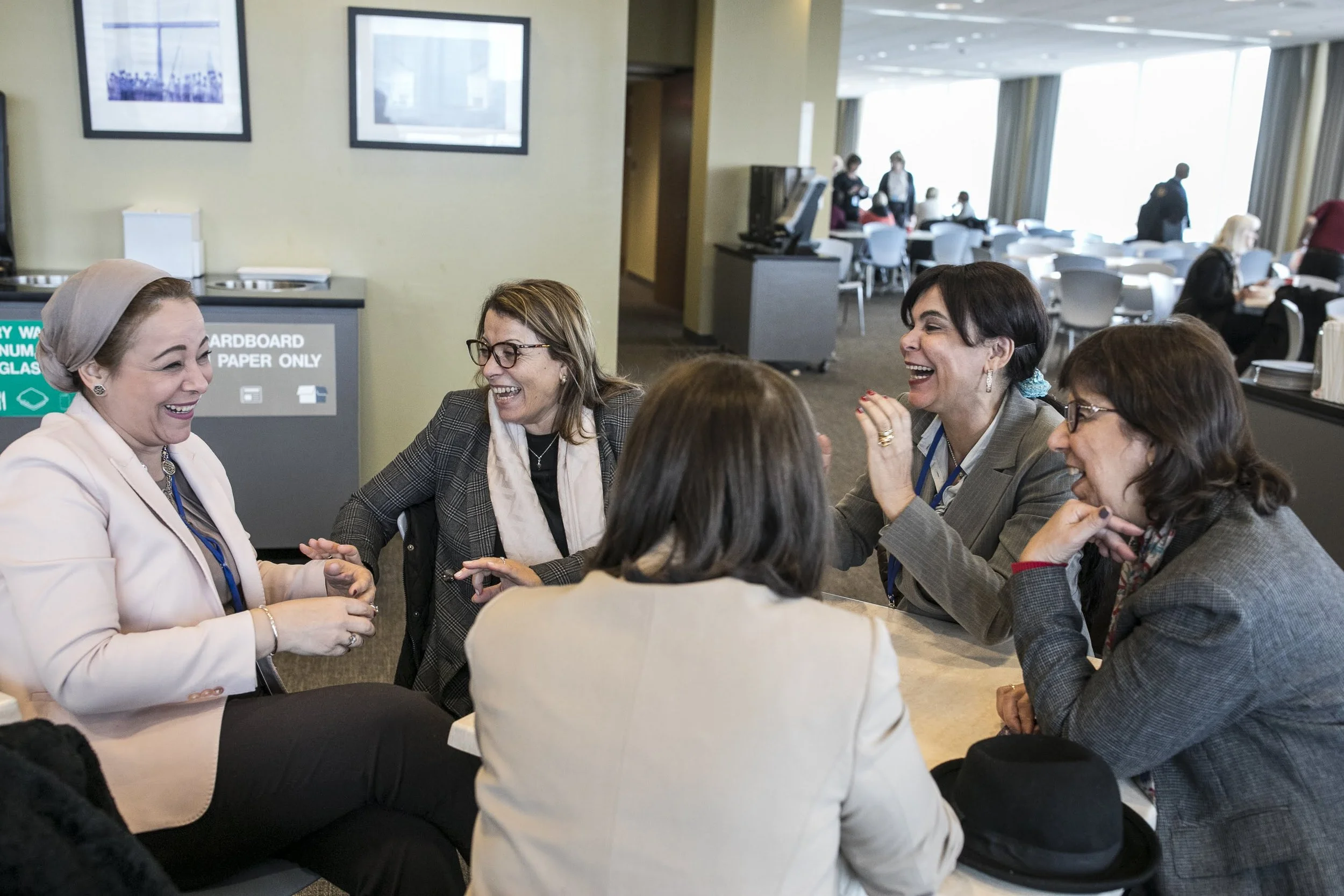
Karama’s regional network supporting national change
What was the impact of Karama on us? Karama was able to help us work together, to give us room for formation, to form associations to influence our reality within the region.
Being part of Karama was an opportunity for women activists in the Arab region to do unified work, joint leadership, and exchange common experiences for women's rights during that period. In Morocco, we had an impact in successfully advocating for a law on violence against women. Karama gave us strength, through training and continuous support on how to work on a strategy for women’s rights within our country. With these trainings and these skills, we were able to have a law in our country, a special law to combat violence against women.
Karama has now been working for 20 years, it's time to evaluate that time, to consider what has passed since the birth of Karama. What have we achieved? What can we examine and understand? What I have achieved, and what we as activists in various groups in the Arab region, we have become a force, we are powers within our countries.
I consider this such an important gain to talk about in these constituencies in relation to the 20 years since the founding of the Karama network.
The power of this proposal is not only the power of my proposal to change the laws, but we have also become a societal force within our nations. We can still have a voice that is heard in changing the laws, as well as in influencing decisions.
I thank Karama for all the efforts it makes. We are in Karama as a family, we do not compete, but rather exchange experiences and it is Karama that has supported each member to become what they are now. We are able to work together and also with the difference of our opinions, our positions, and the difference of our countries, but Karama unites us. And thanks to Karama and Hibaaq, who have done so much to unite all these energies.