
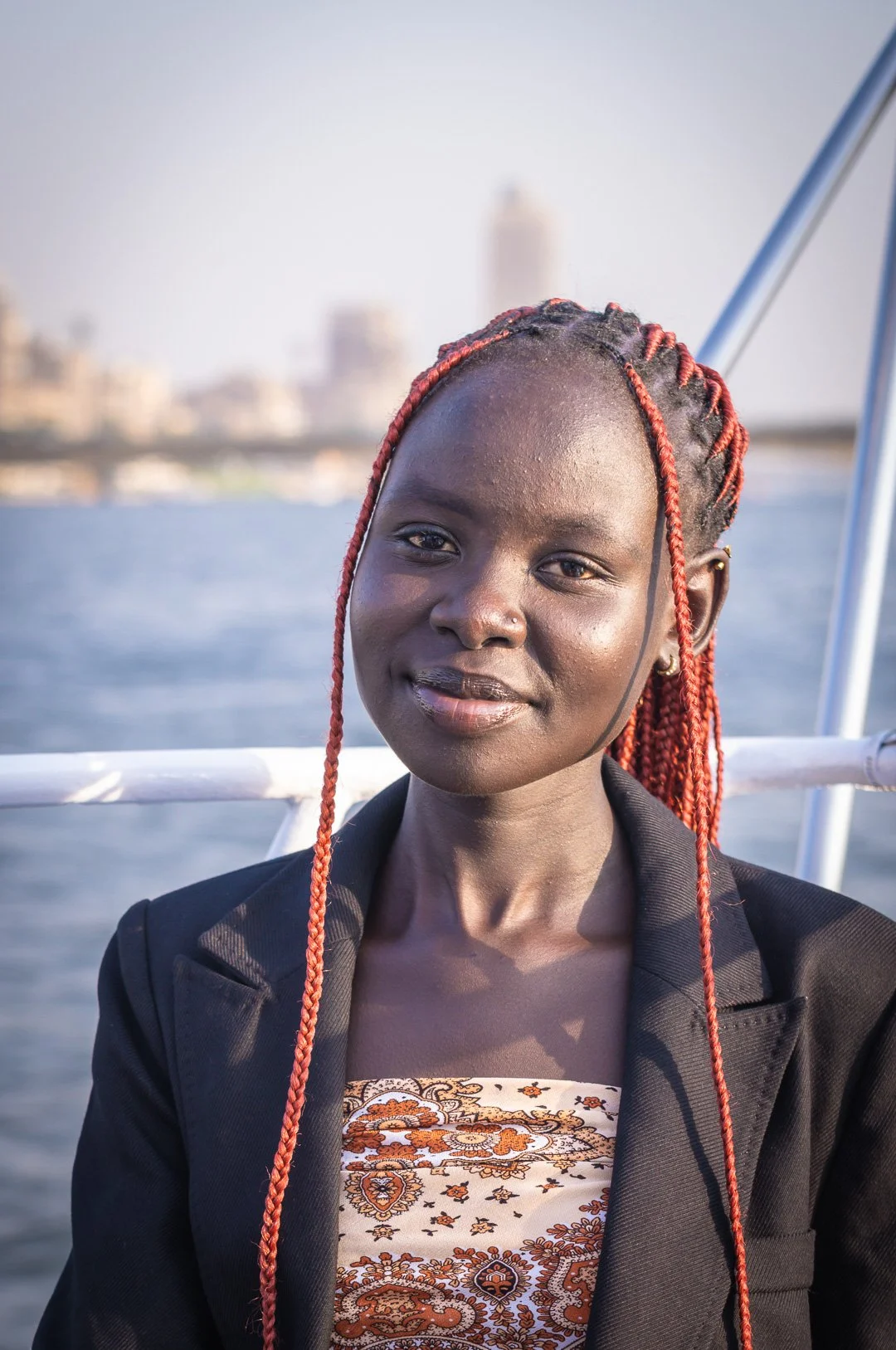
Aluel Deng
Aluel is a youth coordinator for the Wa’ed network for adolescent girls. She talks about her involvement with Karama partner SWIGO in South Sudan, and how it opened her horizons on what she can achieve.
When I was in high school, I first became active and involved with SWIGO - the South Sudan Women in Governance Organisation. I would get involved in events that were happening around, if there were any questions or any inquiries that needed to be answered, or about the girl child, about everything, I would be the one to help. I became a bridge between the SWIGO and Karama when it came to the girl child and adolescent girls.
Adolescent girls’ activism
It was through working with SWIGO that I got involved in the Wa’ed Network for Adolescent Girls, in 2022 at a workshop that was conducted by the Karama for the girls in my community.
Becoming part of the Wa’ed network has really brought a lot of positive impact to my thinking, and I learned a lot through the workshops that we had. I had a good awareness or at least some understanding of girls’ rights, and issues like cyberbullying or early marriage. I learned much more about those issues, as well as others like climate changes and the particular impacts of climate change on girls, and on education. This has really been a journey for me, because I've been involved in it for a very long time.
I've learned a lot of things, and we had a lot of activities. We went to schools, educating the children so we could expand their knowledge. I have always felt that it wouldn’t be good to be the only one educated in the community, for there to be only one person benefiting from workshops and learning opportunities, so we decided to go out to the children, to the mothers, and try and pass on what I have learned.
Being part of Wa’ed had opened up so much to me. Before, I wasn’t really interested in these big issues that affect us. My mentality then was completely different. What we were taught was that there is school, and when you get through school, you just go straight to marriage. But ever since I got involved in the Wa’ed network, I learned that a woman can be independent by herself, and a woman could also do a lot more things in the community, in the organization, and she could be independent by herself. So I learned a lot of things that changed my mindset and changed my mentality.
That was a change that I really felt. I was recognized in many ways in the community, in school, in the workshops that we went to, I was used as an example for the other girls.
The most memorable activity I have done as part of Wa’ed was going to a primary school, sharing my experience with the children. In that time we spent with them, we talked about the Wa’ed network, about the Karama, about girl child, about education, about cyberbullying. That was really an incredible moment, when I looked at the girls and the way they were looking at me, they told me that they looked up to me, they are really grateful, and they're really very happy, because they'd never had any session like it. Inshallah, we shall be having more of this and more contact. I gave them my number in case maybe they're feeling down, or if they're having maybe any personal problems, or someone they need to talk to, they will have to contact me. At that point, I felt like a big sister to them.
New opportunities for girls
We worked on a video with SWIGO where we talked about the issue of climate change, and that video was played to others. When Mama Sarah was still alive, she made sure she played it at our workshop in Egypt, and to the other girls of the country. This has really changed a lot in my life: knowing that I could do this, or knowing that I could get in such a path and do these things.
It means I could do a lot.
And if I can do these things, it means everybody, all the girls around me, in the community, they could also do so much.
Ever since we worked on that video, I have had a lot of opportunities. We went to radio stations and we talked about a lot of the girl-child issues. We went to two different radio stations. On one program they were interviewing us about the Wa’ed network and Karama, because they wanted to know everything about them.
Mobilizing families against cyberbullying
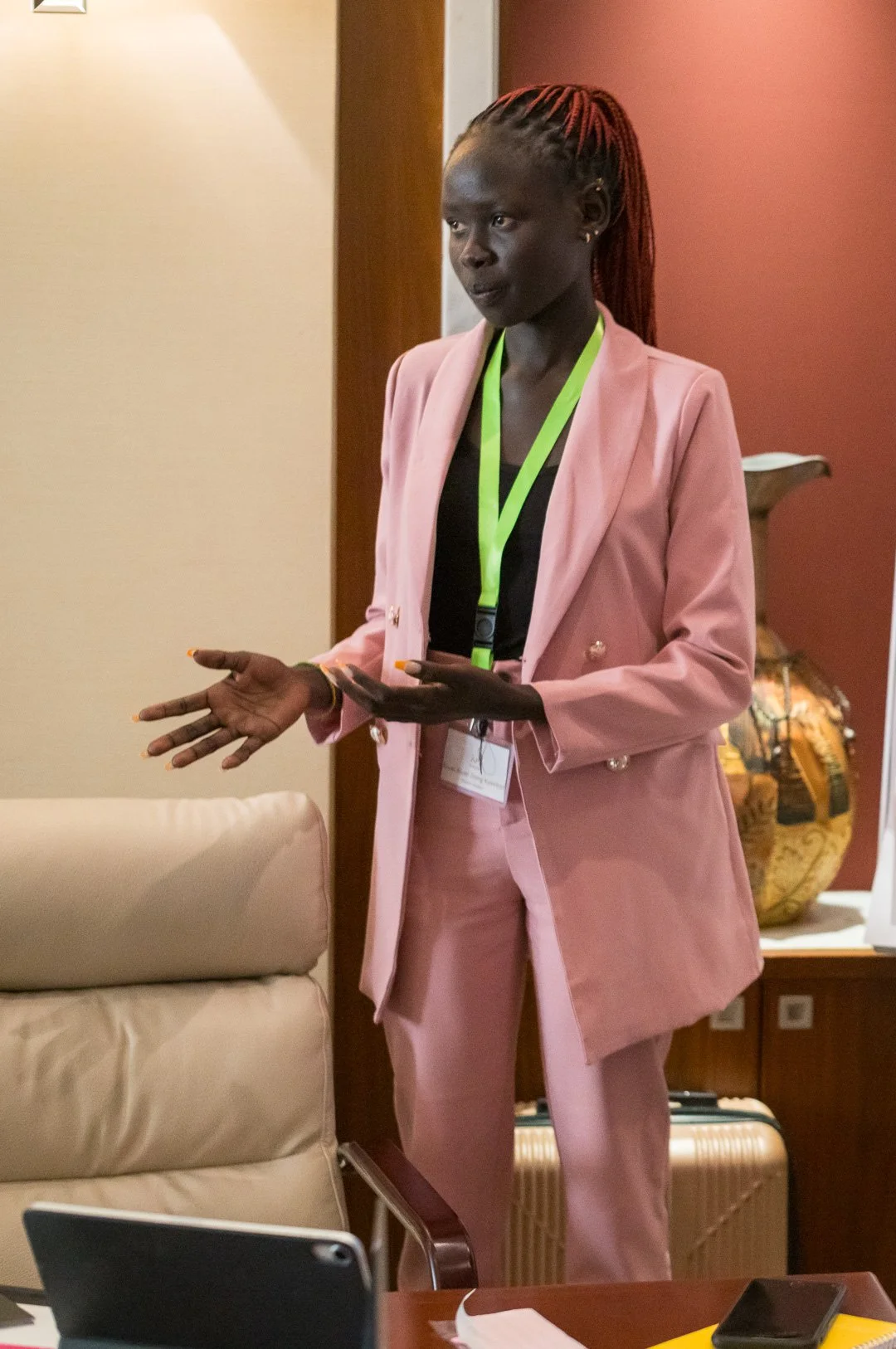
We the went to an urban radio station, and there, we were asked about cyberbullying, the impact it has, and what support there is for people experiencing it.
That opened a very big path for me. It made me known. Talking openly about the impacts of cyberbullying helped to raise awareness, we had a great response and people were grateful for what we did. I realised that there were lots of people who had been affected by cyberbullying, but people didn’t really know much about the issue. So we had a chance to talk with girls, and hear about what they experienced, and help them understand who they could talk to, and where they could go, and help them understand what they had experienced.
People were surprised to hear us talking about these issues on the radio. A lot of parents came out, parents whose children had experienced cyberbullying, and said “oh, you know, we didn't know something like this was really happening, and we didn't know that girls like you could be aware of such things”. I told them that we had been able to learn from being part of the Wa’ed network, this is where I got all the awareness from, and now we are trying to share it with the community and with the people, so that people know where to draw the lines.
From my own experience, I have seen how activism can grow. When we were talking about issues on the radio, parents, children, students, they were eager to know more, and they really wanted to be educated. They were asking questions, they wanted us to share with them what we had learned. There was a time I spoke and I said that I felt like only focusing on the girl-child is not really good, because sometimes we also need to speak to all as a gender. Everybody is involved in this. The girls are the victims, but we also need to speak to the men, so that they can be aware of what they're doing is wrong, and that we all have a responsibility to take action.
Connecting adolescent girls across the region
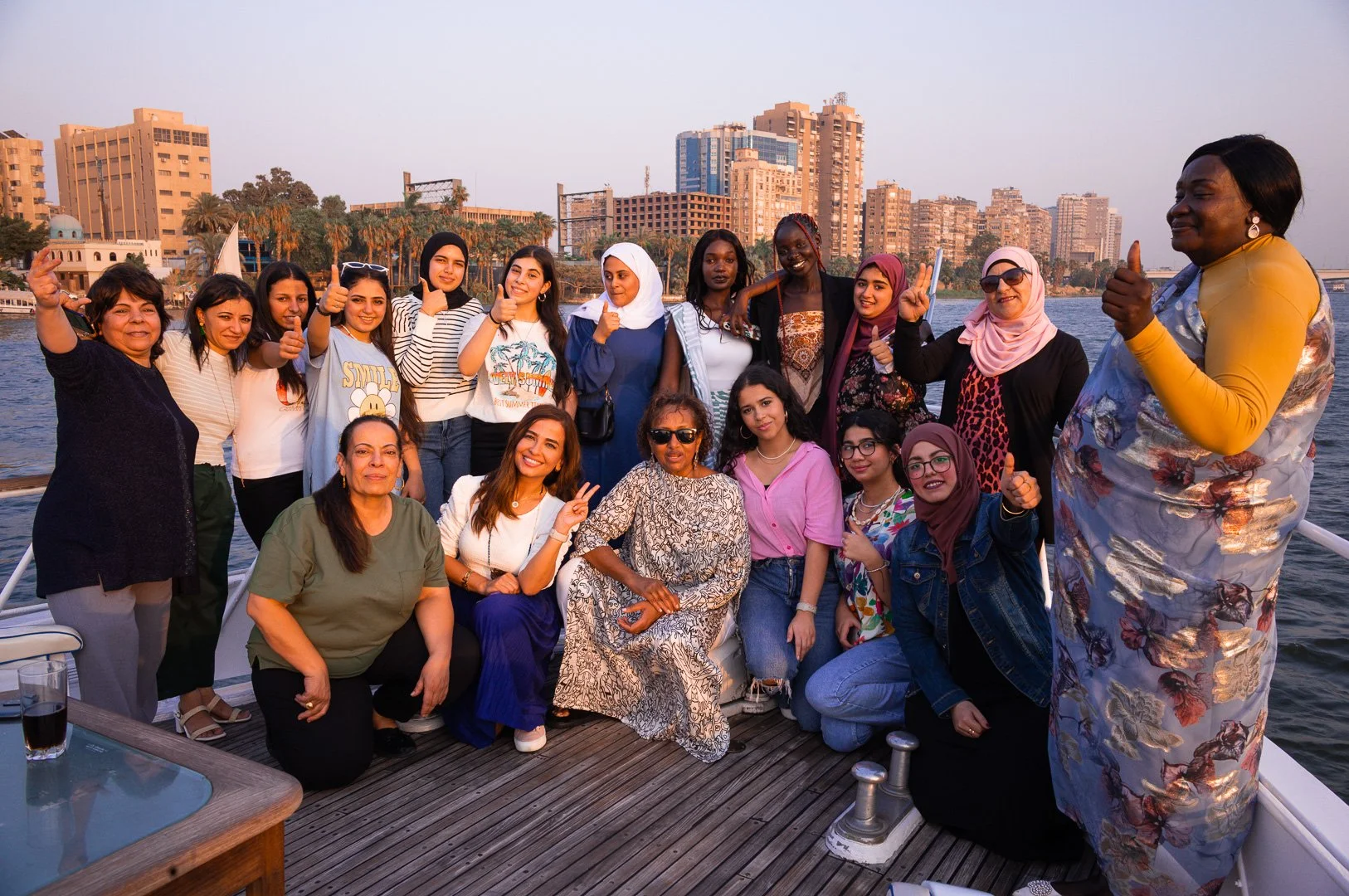
As well as working in my own community, Wa’ed has given me the opportunity to connect with girls from across the region. The first time I got in contact with people from the Middle East and across Africa was when we went for the workshop. I got to learn that the challenges that we're facing as a country in South Sudan, are not unique to our country, everywhere we are having the same challenges, Africa-wide or worldwide.
If we could come together from different continents and sit and talk about our challenges and what we are facing, it means this is the beginning of change, and this is the beginning of something new. If we can keep up with this, it means all of us will have to go back to our countries and we can change everything.
It was really nice. I really loved it. At least I got to know that we South Sudanese, we are not the only ones facing it, also the Palestinians are facing it. Also, the Yemenis are facing it. So, we are coming together as one and sharing our problems. People say a problem shared is a problem solved, we are coming together, sharing our problems, and seeing what we can do about it, and going back to our respective countries, and doing whatever we need to do.
Finding mentorship and inspiration in Mama Sarah
I still have such memories of how that was in 2022, when we had our first meeting with Mama Sarah. A friend of mine told me, “oh, you know what, Aluel, we're going to have a meeting you should come.”. I'm like, oh, it's okay, so I dress up, and I go.
I look at her, and she says “welcome, my child, have a seat.”
So I take a seat, and she went around talking about the Wa’ed network, about Karama, about what she wants to implement to this country, how she wants to educate the young, the girl child.
Immediately I got to see that Mama Sarah is a very strong woman, she's a very ambitious woman, and she's the type of woman that wants change - a change for all, not only for her. So at that point, I got attached to her.
She always looked out for me, and there was no time she ever made me feel like I wasn't her daughter. She always made me feel like I was her child in every activity that happened. She made sure she would involve me, so I was involved in almost all the activities. At that time, when I really got attached to her, what we could get from the activity at the end of the day was not my aim. What I wanted was the knowledge, the perspective, because I looked up to her. Sometimes I was like, oh my god, I wish to really be like you. Looking at her, at her age, at what she was doing, she could just sit home and do nothing, but she is doing everything in her power. Even when she was sick, she made sure that she woke up every morning to do her job and make sure that everybody is okay.
That is really the most memorable part of Mama Sarah.
That is a responsibility I would like to take on, because for somebody to look at you and really find peace and happiness in what you do, I feel like this is a very big role you would play as a human in life. Not everybody has that opportunity. So when you are granted one, and when you are given one, I feel like you should just give it back, because this is all nature, and this is just the wild. It's something that you get, and it's something that you give, so at the end of the day, it is a blessing.
My future
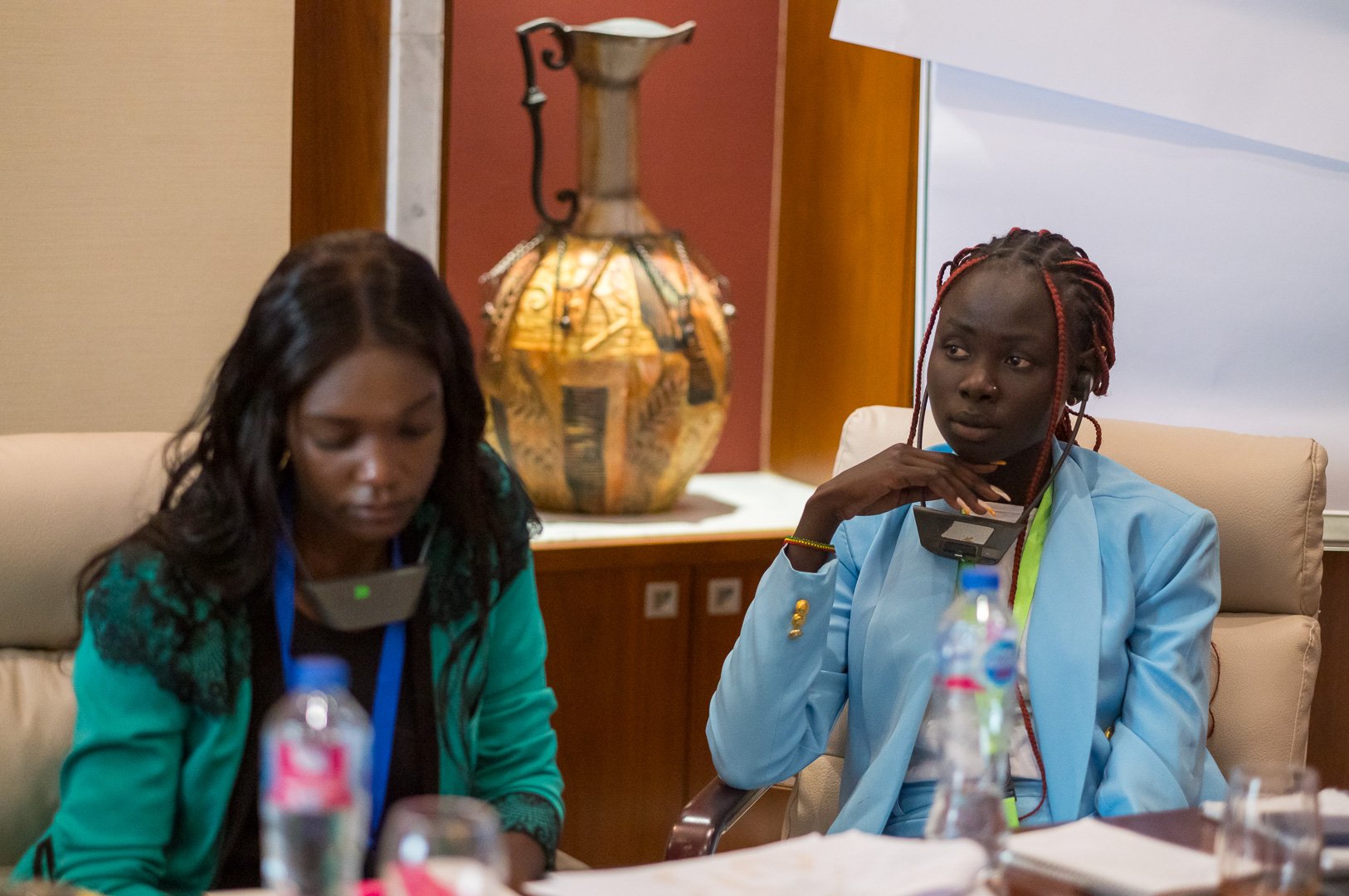
My ambitions for the next 20 years, for myself and my community, is seeing that most of the challenges that we discussed two to three years ago, the changes have been implemented and the problems reduced. I would look up and be like, you know what, guys, we had a workshop some years back, and I am seeing the seeds. What we did is we grew a seed, and now we want to see the fruits of it.
So, by 20 years, inshallah, if things go well, I wish for most of our challenges, but not all, because not everything could be avoided, but at least most of our challenges would have been reduced.
My personal ambition is that I would like to give to the community. I would like to give opportunities and life, education for the community. Because I feel like there are really a lot of things that people want access to, but they do not have. So, if I have the capacity, I would like to give to the community.
I would just love to take the opportunity to thank Karama and the Wa’ed Network day by day. Because if not for them, I don't think I would be here right now. If not for them, I wouldn't have gone out there to talk to the girls, to the students, to the children, to the parents. Karama has really done a lot of things to me. It has given me a lot of opportunities. I really feel great. In the future, if they are having more of this, I would really love to be part of it. And if they have room for more, I would love to bring more.