
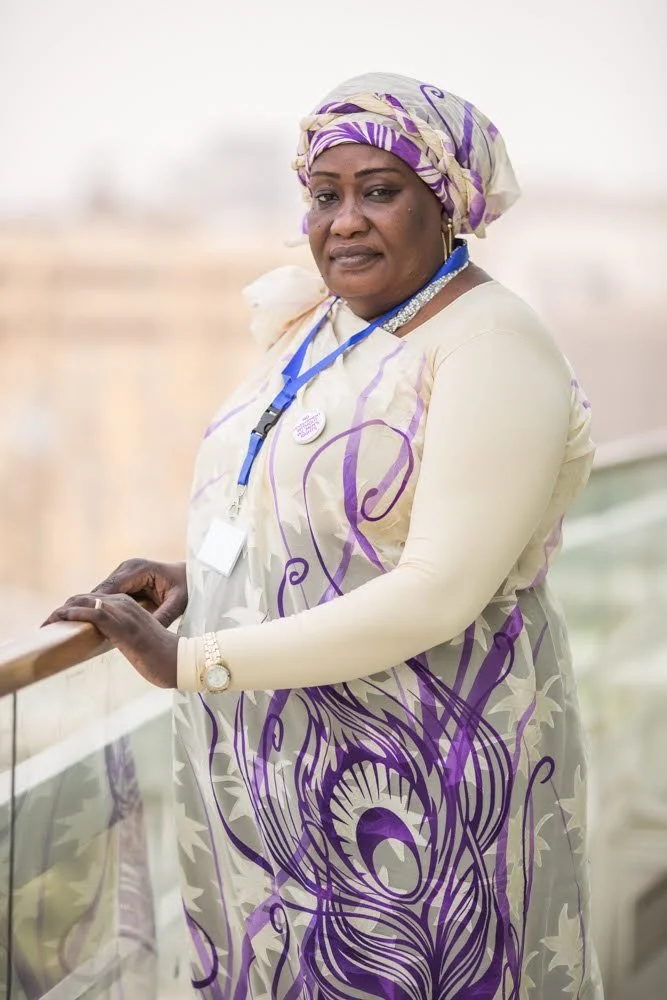
Sarah Awel James Ajith
Through the struggle for independence and then the work to build peace in South Sudan, our friend Sarah James was a pillar of strength and compassion. We celebrate Sarah James through her actions and her words.
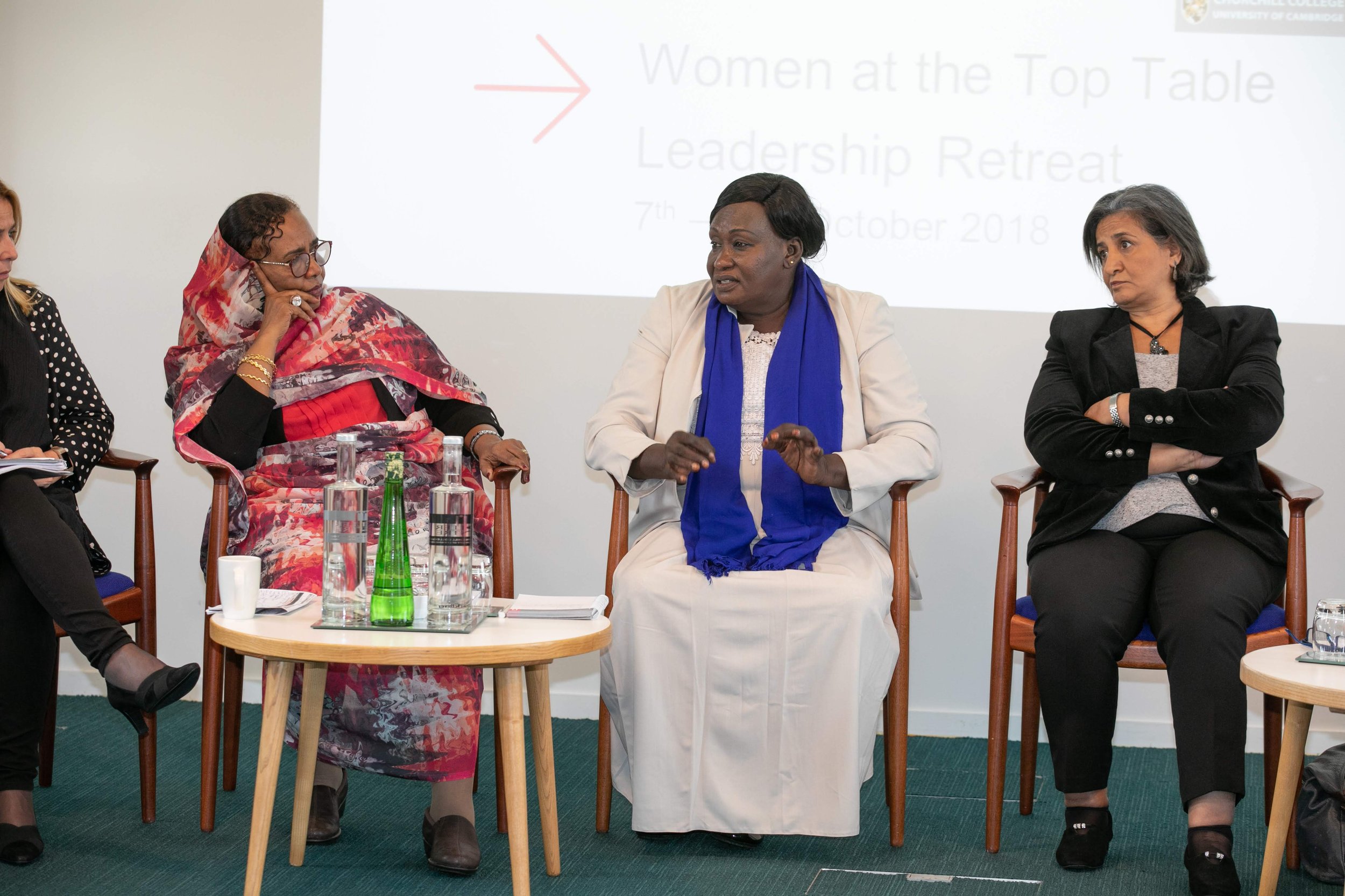
Across the Karama network and our region, few women embodied the concept of dignity more completely than Sarah Awel James Ajit.
Sarah James, or Mama Sarah as she was known, was a truly remarkable and inspirational woman, and the pioneer behind the Support for Women in Governance Organisation (SWIGO), key Karama partners in South Sudan.
Mama Sarah’s activism, her connection with her community, and her clarity of purpose through South Sudan’s difficult path through independence, instability, and reconciliation, made her one of the most respected figures in Karama. Even before South Sudan gained independence, Mama Sarah’s humanitarianism and dedication was well recognised. In 2009, she was elected to lead the South Sudan Women General Association, and she would go on to play a key role in the Taskforce for the Engagement of Women In Sudan and South Sudan.
Through her work with her own organization, her leadership and memberships, Mama Sarah developed an international reputation. Mama Sarah led work to address key forms of discrimination against women and girls in South Sudan: campaigns to end child, early and forced marriage, Her work on peacebuilding following from the years of conflict before and after independence was an object lesson in humility and honesty. Softly spoken in so much of her work, her words carried so much weight that she barely needed to raise her voice in order to command attention and respect.
When Mama Sarah did speak with force it was enough to shake the foundations of those whom she held to account. For those who faced discrimination, inequality, and injustice, Mama Sarah held boundless compassion. While deeply professional and diplomatic, Mama Sarah would have clear and fair words for those whose failure perpetuated or condoned the discrimination, inequality, and injustice.
When South Sudan had gained its independence, Mama Sarah showed the courage to note publicly that the fight for dignity was not over for all South Sudanese. In her remarkable speech for the 16 Days of Activism in 2011, a little over three months after South Sudan became the 193rd member state of the United Nations, Mama Sarah celebrated the women of this young nation, and noted that they were still on the streets demanding their independence. We reproduce her speech in full below in tribute to the power of her words and convictions.
As a member of Karama, Mama Sarah played a leading role in implementing the Karama Initiative for Adolescent Girls, and latterly the Wa’ed network. Through this, Mama Sarah demonstrated her skill and sensitivity, encouraging young women and girls in her community to become leaders in their own right. Aluel Deng, one of the young women from South Sudan who became so important to the formation of the Wa’ed network, speaks here about the influence that Mama Sarah had on her.
Sarah Awel James Ajit died on April 9th, 2022 while on a peacebuilding mission in Pibor, South Sudan. She left a legacy of countless people inspired by her example, her selflessness, and her sense of duty. We thank Mama Sarah for everything that she gave to South Sudan and the world, her memory inspires us on.
Sarah James’ Message for the 16 Days of Activism, December 2011
In her role as Chair of the South Sudan Women General Association, Sarah Awel James Ajith gave the following address to mark the end of the 16 Days of Activism in 2011 . South Sudan had voted in January that year to secede from Sudan, with independence declared officially on July 9th 2011. In her speech, Mama Sarah celebrates the role that South Sudanese women played in the independence movement, while noting that women are still to achieve their freedom.
In the first place, I, and I alone, have a feeling that I think is different from the rest today. I just feel like to give a reward to somebody, but who is that? But where is that award? Since I do not have a trophy or a special reward to that person, let me just say thank you only to you. The person I mean here is YOU, I mean the woman, any woman who is a citizen of South Sudan between 1955 and 2011 deserves a special prize.
My dear mothers, sisters and daughters present here, on my own behalf, on behalf of my family, and my association (SSWGA), and my country, the Republic of South Sudan, please just do me a little favour, just tell your neighbor, the person sitting next to you now, these three sentences:
WOMAN OF SOUTH SUDAN, THANK YOU FOR GIVING US THIS FREEDOM! WOMAN OF SOUTH SUDAN, CONGRATULATIONS FOR MAKING THIS HISTORY!
WOMAN OF SOUTH SUDAN, BRAVO FOR BEING PART OF THIS HISTORY!
Thank you very much for carrying out that small exercise for me and for all of us. We deserve more than just a ‘thank-you’. If we stop a bit in a moment of silence and begin to reflect back to those years, the years of our suffering from the hands of the Jallaba, the years of the suffering from the heat of the wars of liberation, the years of our struggle to make this dream a reality, of the suns and the rains we have resisted both in the bushes and on the streets of South Sudan, the noise we have made all the way to the 9th of July, 2011; all these reflections, just make me, the woman of South Sudan, feel big, bigger and even the biggest than any other freedom fighter in this age of liberation struggle.
However, I feel again something different as we gather today. I feel like we are lying that we have achieved our freedom. Which freedom? Freedom from what? And from who? I am again disappointed when I realize that the freedom we are boasting about is half freedom, freedom for our children and their children, freedom for our men and women today. But given the day we are in today, we still have a lot of freedom to fight for. Then are we right to say we are independent? Is it true that we have achieved our independence?
I am sorry to see a bigger part of this new country still on the streets looking for independence. Which independence again? This is what our sons and husbands are asking when they see us on the street again four months after the declaration of our independence. They are laughing. Don’t be surprised to see your son asking you later in the evening, “Mama, but why are you still shouting on the streets, on radios and on televisions when we have achieved our freedom?” Yes, they don’t know! So we are here to tell them. Tell them again that 65% of this country is not yet free.
They don’t know. Preach it to them. Tell them the theme of this year’s campaign against Gender-Based Violence: From Peace in the Home to Peace in the World: Let’s Challenge Militarism and End Violence Against Women.” This theme has said it all. Indeed, if we have peace in our houses, the whole world will be peaceful. Yes, they say charity begins at home, so let peace begin at home. If we could manage to make peace between the Arabs and the Africans in the Sudan that brought about this independence, why then can’t we make it between us and our husbands, between our daughters and their brothers?
I like the second part of the theme, which says: Let’s Challenge Militarism and End Violence Against Women. This part is talking about the ‘how’ method of doing that. But having talked about the causes and solutions of this specialized type of violence in our previous days of campaign, let me just give a few example of the causes and effects of this private war.
One of the forms of militarism against women today is forced and early marriage to our children. We have a long list of young girls who have ended their lives on the rope after such a violent marriage. Examples of suicide as a result of forced marriage on young girls are rampant in Lakes State. You heard last year of a girl that committed suicide in Wulu County because of being forced to marry her father’s agemate. What was the reason? The poor man has only 3,000 Sudanese pounds, and this is what the family wanted, so they removed their daughter from school and sold her away.
Early this year, a girl was killed, actually she was beaten to death by her own father and brother because of refusing the man they wanted and eloping with the man she wanted. What is the problem? Forced marriage. What is the cause? Bride price. I am really ashamed to mention the word price when we are dealing with our fellow human beings. When we are supposed to talk of ‘prizes’ or rewards to our women, we are talking of prices or the cost for buying a human being. Now, can we still believe that slave trade has been abolished? Now, it is existing in a hidden form. The hidden form of slave trade is in bride price or dowry. For example, a man buys a girl and then treats her like a piece of property in the house. That is the biggest cause of Violence Against Women in this country.
Another problem is now attached to widowhood. The war of liberation has not only brought everybody to nationhood, it has also brought many women to widowhood. Many women are now widows as a result of the war. One funny thing which I really like with our culture is these women without husbands are not without children. They have no husbands but they have children. This is a great achievement again. However, it is the source of problem. Why? The children who are orphaned by their fathers and those who are born by uncles after the death of their fathers are left at the mercy of the poor mothers. These mothers are made poorer by our cultures. Our tradition dictates that a woman cannot own a property like a house or cattle. That means a brother-in-law must own the property left behind by the widow’s husband. Imagine the war that can break out over such properties in families of this nature.
And the only solution is not just this campaign but the law. Such women should be empowered by our constitution. There is a day for saying this alone. Not only a day, but all the days should be dedicated to campaign for the legislation against bride price, forced marriage, early marriage, rape or defilement, wife inheritance, wife beating, child labour, and all those types and causes of Gender-based Violence that you have to add to this long and endless list of our complaints.
I am not here to end my speech against violence against women. I am just stopping because my time for this speech has come to an end. So I am going to sit and plan for another time for the same topic.
But before I sit down, let me remind you that next year is a special year for this campaign again. From this 16-day campaign, we are in the 100th year of the International Women Emancipation campaign. That means next year, 2012, we shall be celebrating our 101st International Women’s Day in March. Therefore, it is my request that though we shall end the 16 days here, let us carry on with the same spirit in all the social and political events that each and every woman attend until March next year.
Correction, not until March but until November next year. No, not until November but until we achieve full peace in our homes, meaning in our world.
May God bless the South Sudanese Women’s struggle.
May God Bless South Sudan.
Thank you all for listening to me.
Thank you very much for making this day possible. For the last 16 days, we have been campaigning here and there, one way or another. I hope we have also discussed with our families the issues we always say in public about home violence. This is because charity begins at home, so peace should also begin at home, then to the media and public places.
Juba, December 2011