
Lack of progress on women’s participation a key challenge in South Sudan’s peace process - CIGPJ
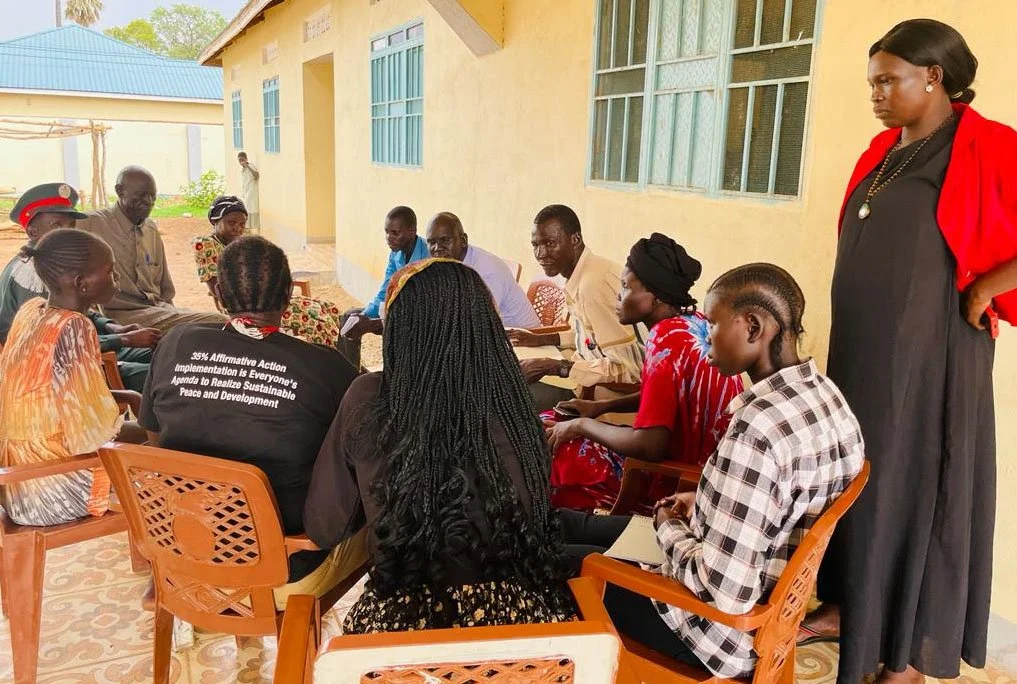
Particpants at a CIGPJ consultation event. One participant wears a t-shirt with the slogan “35 per cent Affirmative Action Implementation is Everyone’s Agenda to Realize Sustainable Peace and Development”
Despite the promise of a minimum quota for women’s participation in South Sudan’s peace agreement, women continue to be underrepresented in decision making. The failure to ensure inclusivity demonstrates a significant example of the fragility of the peace process.
An analysis of the peace process carried out by Karama partner the Centre for Inclusive Governance, Peace and Justice shows that many state institutions have not met the 35 per cent quota agreed in the Revitalized Agreement for Resolution of Conflict in South Sudan (R-ARCSS). While the appointment of two women Vice Presidents has ensured that office meets the quota, many others fall well below. Women make up 30 per cent of the members of parliament, five percentage points below the quota, while none of the 10 state governorships are held by women.
The data sheet from CIGPJ notes that legislation that could address issues like violence against women and girls and inequality are not being progressed through parliament. Draft bills include legislation covering gender-based violence, family law, and women’s enterprise are stalled. Women’s participation is a key factor in building the political will to pass such legislation.
CIGPJ identifies “structural inequalities, restrictive gender norms, insecurity, and limited access to decision-making” as the key factors that have prevented the quota for women’s participation being met. To address this problem, the authors recommend legal, institutional and advocacy measures to ensure meaningful inclusion”.